 ENG
ENG  English
 русский
 Español
 Português
 عربى
عربى


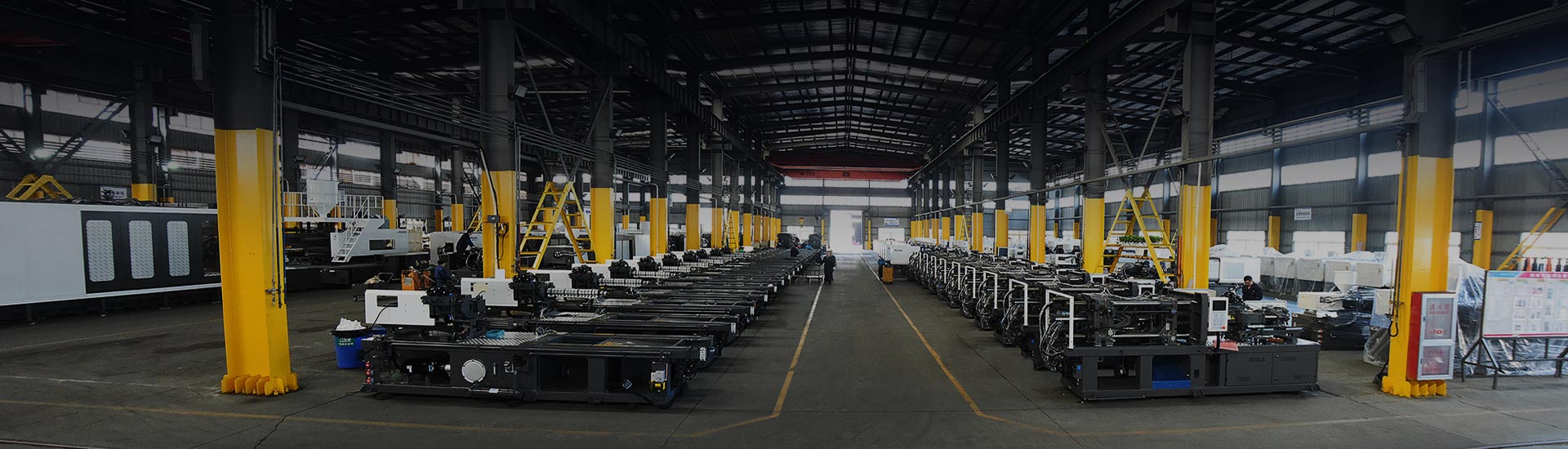
A packaging plant running high-cavitation PET preform moulds and a medical parts supplier manufacturing implantable components both depend on injection moulding, yet their equipment lists share little beyond the name of the process. Injection moulding converts more polymer each year than extrusion, blow moulding, and thermoforming combined, according to industry estimates, and it shapes products across nearly every manufacturing sector.
The practical consequence is that "injection moulding machine" is a category rather than a single model. Clamping force, injection speed, screw geometry, drive architecture, and control precision all have to match the product being moulded. This article reviews the main application areas of injection moulding and explains, sector by sector, which machine characteristics matter most for profitable production.
Content
- 1 Major Application Areas of Injection Moulding
- 2 Application-Specific Machine Requirements
- 3 Matching Machine Type to Production Profile
- 4 Process Efficiency, Energy and Structural Considerations
- 5 Frequently Asked Questions
- 5.1 What are the main applications of injection moulding?
- 5.2 How do I calculate the clamping force needed for my product?
- 5.3 How much energy can a servo injection moulding machine save?
- 5.4 Can one machine process different plastic materials?
- 5.5 What is the difference between two-platen and toggle machines?
- 5.6 How should I maintain an injection moulding machine?
Major Application Areas of Injection Moulding
Injection moulding serves every industry that produces plastic parts in volume. The largest end-use blocks, by global output, are:
- Packaging — bottle preforms, closures, thin-wall containers
- Automotive — bumpers, interior trim, connectors, under-hood parts
- Consumer goods — appliance housings, kitchenware, household items
- Medical — syringes, IV connectors, inhalers, surgical instruments
- Electronics — connectors, housings, precision gears
Each sector stresses the machine differently. Packaging demands high cavity counts and short cycles; automotive requires structural consistency and multi-material capability; medical parts demand repeatability and traceability; electronics needs thin-wall filling at high injection speed; consumer goods balance part quality with energy cost. This spread explains why manufacturers develop application-specific machine series rather than a single universal model.
Application-Specific Machine Requirements
Matching the machine family to the product portfolio is the starting point for any injection moulding investment. The main application groups and their equipment requirements are summarised below.
Automotive and Transportation
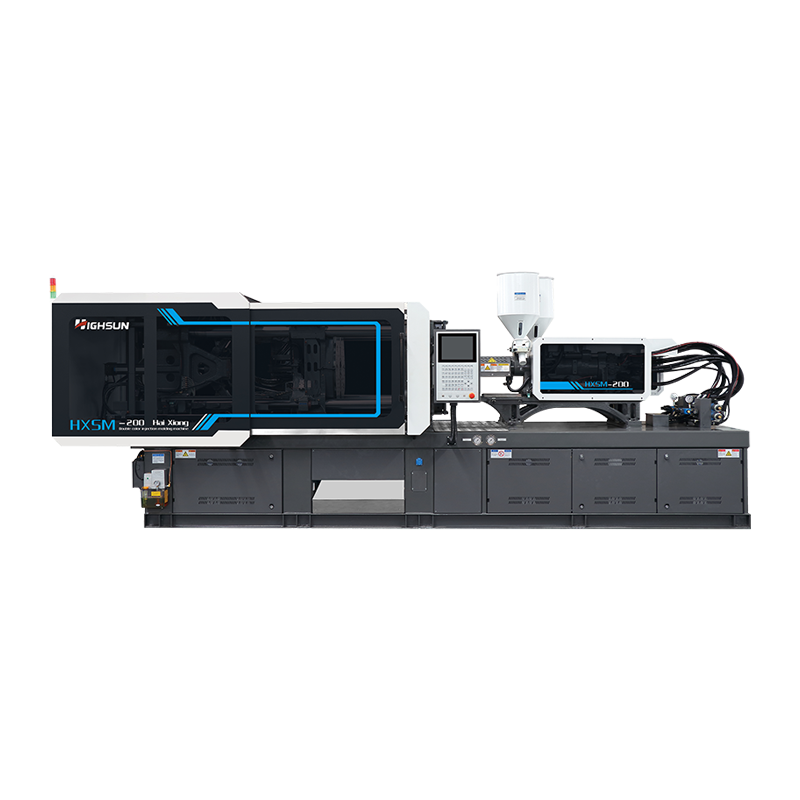 HXS200 Two-Color Servo Injection Molding Machine for Multi-Material PartsThis two-color machine supports synchronized injection of two materials, ideal for combining rigid and soft plastics in automotive interior components. Its servo energy-saving system and independent barrel control ensure stable quality and reduced assembly steps.View Product →
Automotive parts range from large bumpers and door panels to small sensor housings and connectors. Designers increasingly combine rigid substrates with soft-touch overmoulds, textured surfaces, and multi-colour light guides. That pushes moulders toward two-platen machines for large body components and two-colour machines for overmoulded interior parts. Typical materials include PP, ABS, PC/ABS, PA, and POM, each with different shrinkage and flow behaviour. Stable injection pressure, reproducible shot weight, and high clamping rigidity are non-negotiable. A two-colour machine also eliminates a separate assembly step when hard and soft materials are combined in one part.
Medical and 3C Electrical
Medical moulding is governed by cleanliness, repeatability, and documentation. Parts such as syringes, IV connectors, and inhalers have thin walls and tight tolerances, so precise screw speed control and low-inertia servo drives matter more than top speed. In 3C electrical products, connectors, housings, and LED lenses require high injection speed, stable melt temperature, and minimal flash. Both segments benefit from closed-loop control and consistent cycle-to-cycle performance.
Packaging, PET Preforms and Thin-Wall Containers
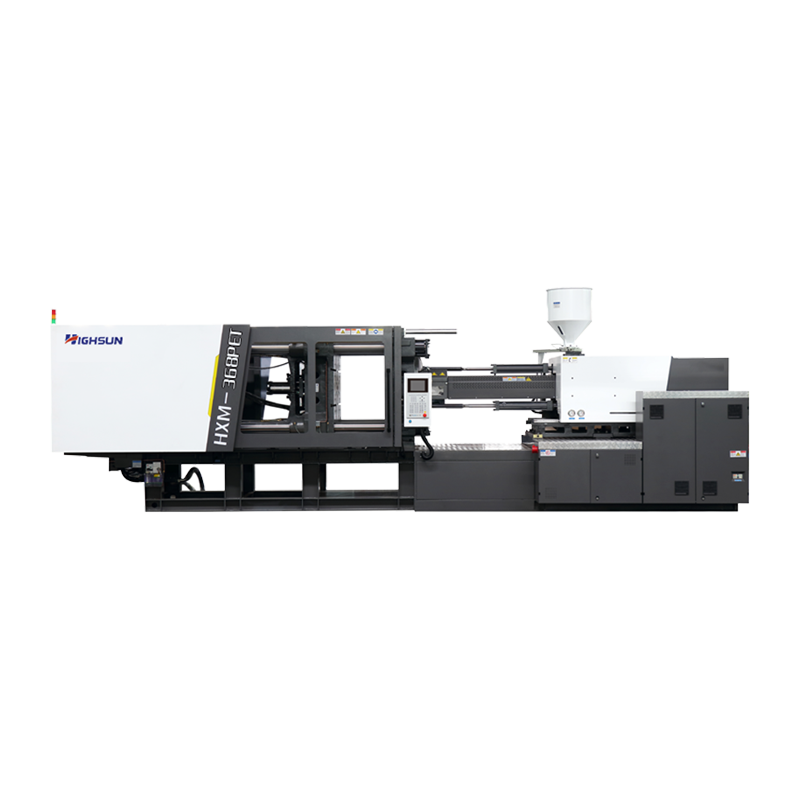 HXM368-PET Dedicated PET Preform Injection Molding MachineA 368-ton dedicated PET preform machine with hydraulic-electric hybrid drive, balancing high precision and energy use. Suitable for large preforms and packaging containers where consistent melt temperature and fast cycles are critical.View Product →
Packaging is a volume business in which cycle time and cavity count determine unit cost. PET preforms for beverage bottles require a dedicated screw design that limits shear heating while delivering consistent melt temperature; preform wall distribution directly affects the mechanical performance of the finished bottle. Thin-wall food containers and cups demand high injection speed to fill long, thin flow paths before the polymer freezes. Dedicated PET preform machines are built for near-continuous operation, so energy efficiency becomes as important as cycle time.
PVC and Building Products
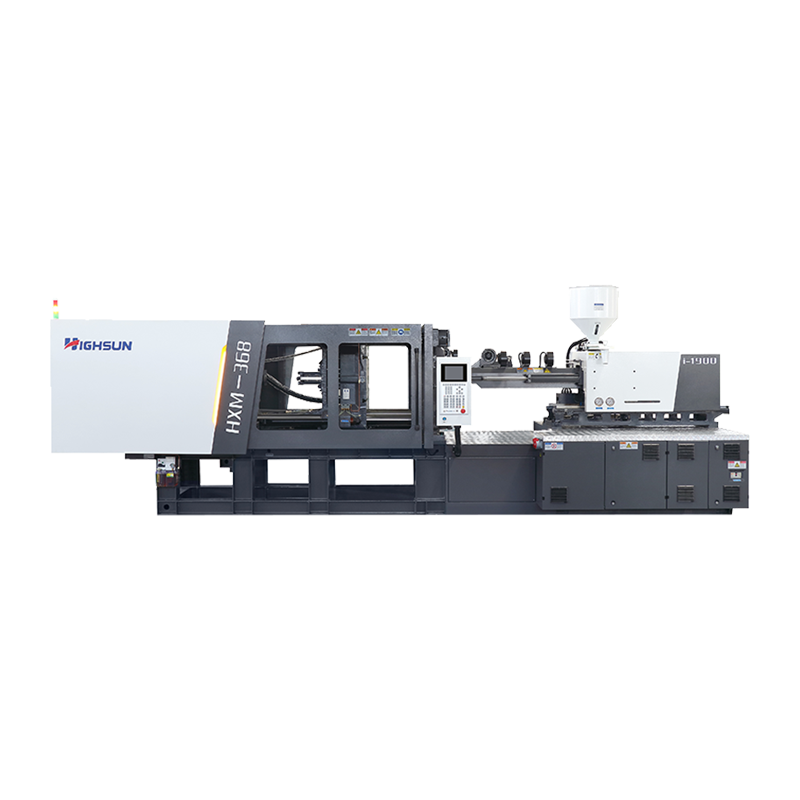 HXM368-PVC Injection Molding Machine for Heat-Sensitive MaterialsEngineered for PVC and CPVC with corrosion-resistant components and precise temperature zones to prevent decomposition. Wider platens and higher ejector capacity suit thick-walled fittings and building products, reducing scrap and downtime.View Product →
PVC and CPVC are heat-sensitive materials. Pipe fittings, valves, electrical conduits, and cable ducts are typical injection moulded building products. Corrosion-resistant screws and barrels, precise temperature zoning, and screw geometries without stagnant zones prevent decomposition and burn marks. Dedicated PVC machines also offer wider platens and higher ejector capacity for thick-walled fittings. For processors running 200 to 850 tonne machines, a PVC-specific design cuts both scrap and cleaning downtime.
Home Appliances, Household Products and Logistics
Refrigerator trays, washing machine components, storage boxes, crates, and paint buckets are moulded on machines with wide platens, deep opening strokes, and high shot capacity. For crates and paint buckets, optimized servo machines balance filling speed with energy consumption. Stacking strength and dimensional consistency in logistics products depend on uniform packing and controlled cooling, which in turn rely on stable clamping and repeatable injection parameters.
Matching Machine Type to Production Profile
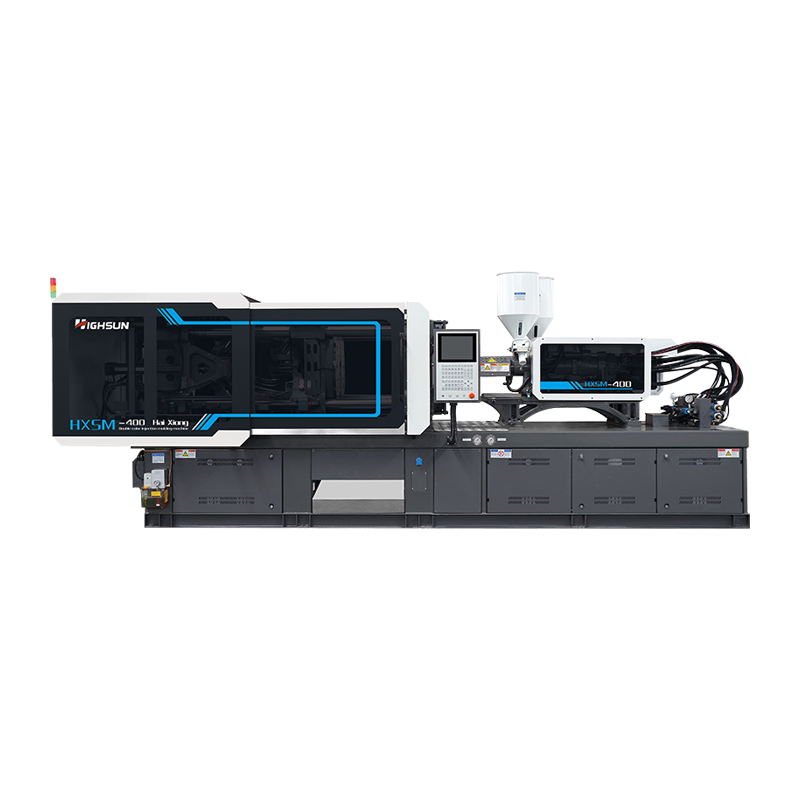
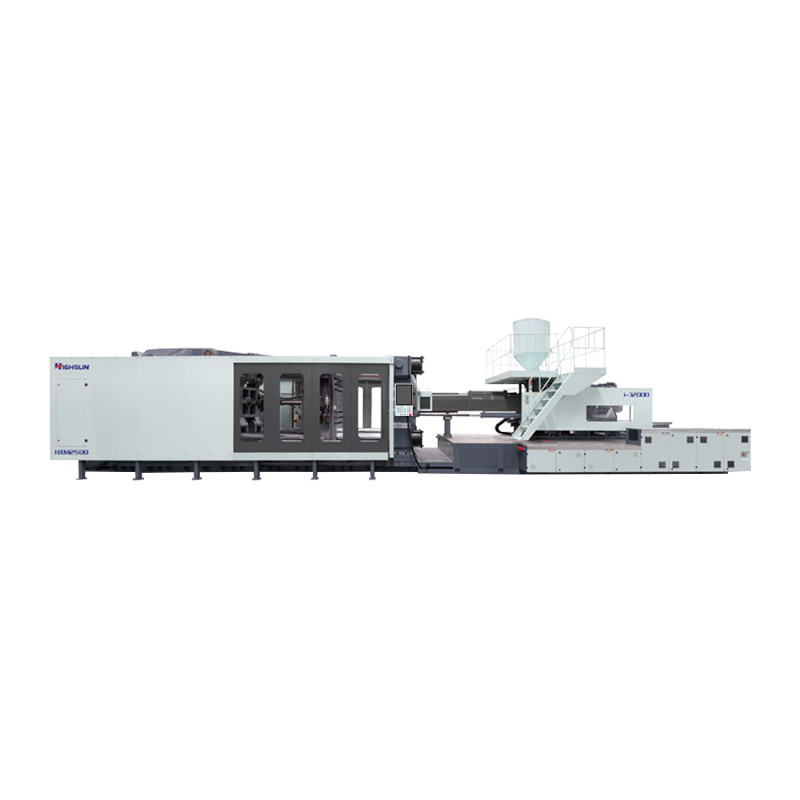
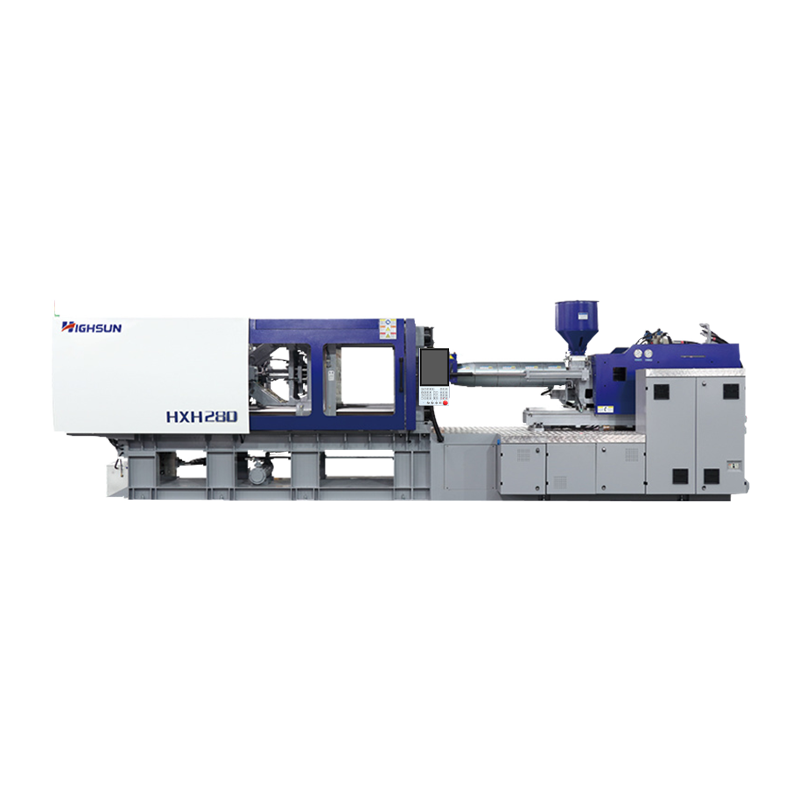
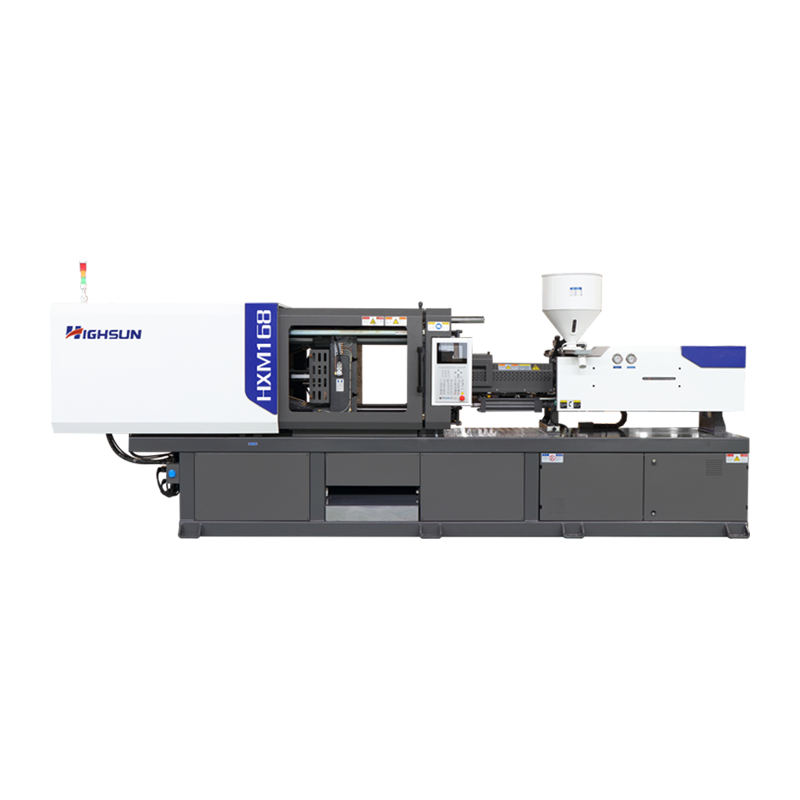
Selecting a machine family should begin with the product portfolio, not the brand. Across the HIGHSUN range, developed by Ningbo Highsun Plastic Machinery with more than 50 years of accumulated industry heritage, six families cover the main application segments.
| Machine family | Typical products | Key strengths | Clamping range |
|---|---|---|---|
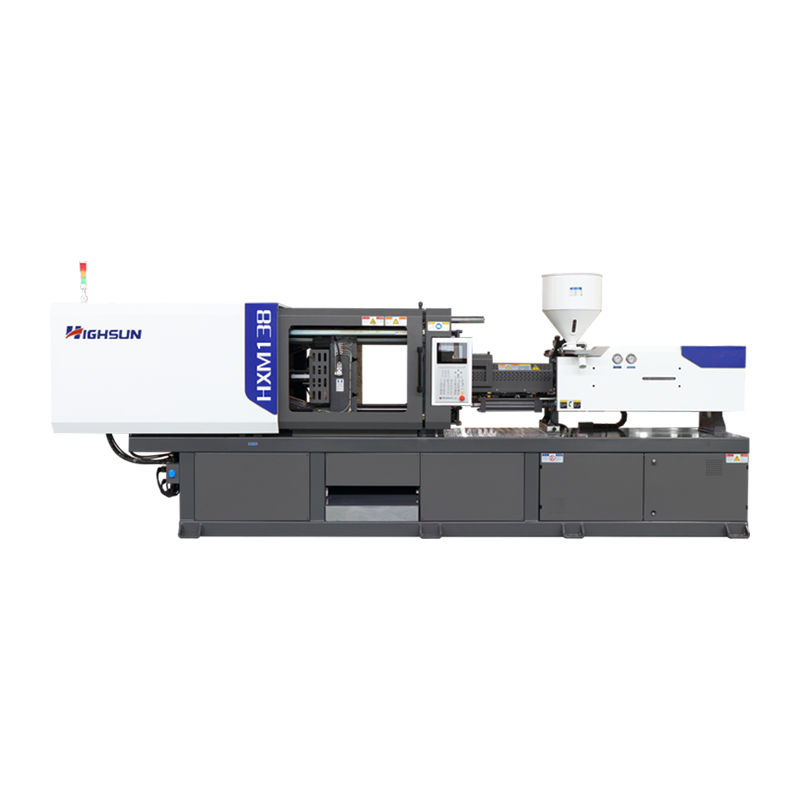
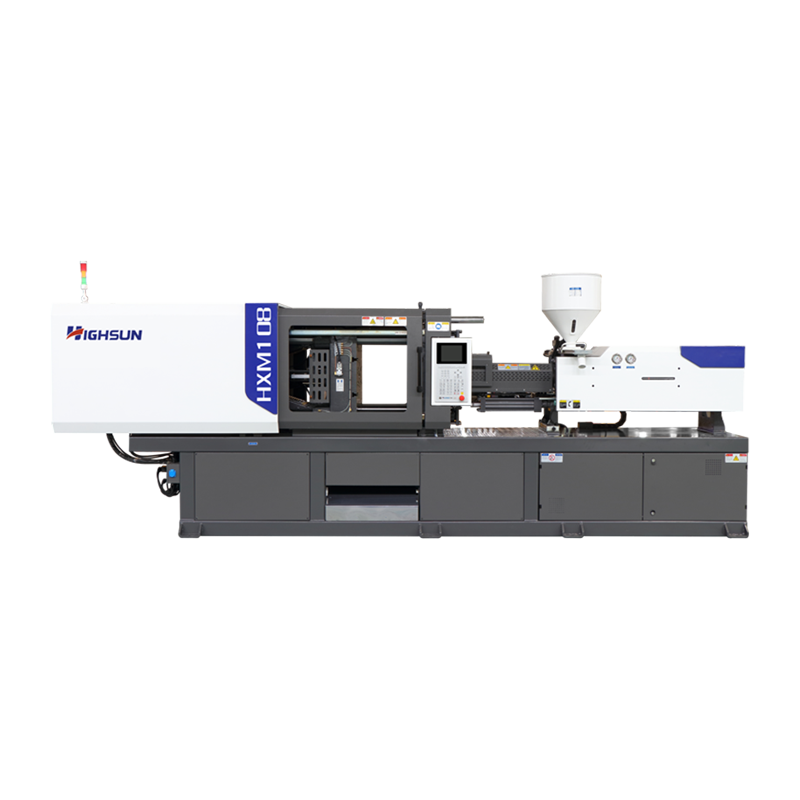
| HXM Servo | General parts, crates, household goods | Broad tonnage range, energy efficiency, proven control | 108-2200 t |
| HXH High-speed | Thin-wall containers, food packaging | High injection speed, fast cycling | 280-450 t |
| HXYD Hybrid | Medical parts, precision engineering components | Precision, low energy, stable pressure | 100-130 t |
| HXS Two-colour | Automotive interior, dual-material parts | One-step overmoulding, 180 degree mould rotation | 160-200 t |
| HXZ Two-platen | Large automotive parts, bumpers | Long opening stroke, compact footprint | 800-3300 t |
| PET / PVC specials | Bottle preforms; pipe fittings and valves | Dedicated screw and barrel design | PET 208-558 t; PVC 168-850 t |
The radar chart below compares three commonly chosen families across five purchasing criteria. Values are indicative ratings based on typical machine characteristics.
The trade-offs are visible in the radar profile above. Servo machines give the broadest combination of energy savings, flexibility, and precision at moderate cost, which is why they anchor most production lines. Hybrid machines improve precision further and suit medical and instrument-grade components. High-speed machines trade flexibility for maximum filling speed where wall thickness is small. Two-colour and two-platen machines add specific manufacturing capabilities instead of replacing a general-purpose line.
Process Efficiency, Energy and Structural Considerations
Energy is the largest variable cost of injection moulding after raw material. Fixed-pump hydraulic machines consume roughly constant power, variable-pump hydraulic machines reduce input during holding and cooling, servo-driven machines modulate output continuously, and hybrid machines combine electric injection with hydraulic clamping. Depending on the part and cycle profile, servo systems typically reduce energy consumption by 20 to 80 percent compared with fixed-pump machines.
Melt quality and part consistency also depend on the machine structure. The reciprocating screw plasticizes the polymer in the barrel, the clamping unit holds the mould closed against injection pressure, and the drive system supplies the motion. The structural layout determines how evenly the platen distributes clamping force, how quickly the screw reacts to pressure changes, and how different mould sizes are handled; these factors show up directly in scrap rate, flash, and cycle time.
For a structured approach to sizing parameters and configuration options, refer to our guide on choosing the right injection moulding machine.
Frequently Asked Questions
What are the main applications of injection moulding?
Injection moulding is used for packaging, automotive parts, medical devices, electronic housings, household goods, PVC building products, PET preforms, and logistics crates. It is the most widely used process for producing plastic parts in large volumes.
How do I calculate the clamping force needed for my product?
A common estimate is 2 to 3 tons of clamping force per square inch of projected area, adjusted for material flow and wall thickness. For a more precise value, multiply the mould cavity pressure by the projected part area.
How much energy can a servo injection moulding machine save?
Typical savings range from 20% to 80% compared with fixed-pump hydraulic machines. The largest savings occur in parts with long holding or cooling phases.
Can one machine process different plastic materials?
Yes, a general-purpose machine can run PP, ABS, PE, and PS. For heat-sensitive PVC or PET bottle preforms, a dedicated screw and barrel configuration is recommended.
What is the difference between two-platen and toggle machines?
Toggle machines provide faster dry cycles for medium parts. Two-platen machines offer a longer opening stroke and a more compact footprint for large parts, commonly used in automotive applications.
How should I maintain an injection moulding machine?
Check oil level and filters daily, monitor heater bands and temperature control, inspect screw and barrel wear, clean mould surfaces regularly, and calibrate pressure sensors as part of a routine maintenance schedule.
 +86-188 6861 6288
 haixiong@highsun-machinery.com
 No.36 Yongjiang South Road, Beilun District. Ningbo City, 315800, China