 ENG
ENG  English
 русский
 Español
 Português
 عربى
عربى


Content
- 1 How plastic injection molding technology works: the five-stage cycle
- 2 Machine technology platforms: matching the drive system to the part
- 3 Process parameters: what actually controls part quality
- 4 Materials change the machine, not just the recipe
- 5 Common defects: root causes and practical fixes
- 6 Energy efficiency: comparing drive systems with real numbers
- 7 Choosing the right technology: a practical buying framework
- 8 Frequently asked questions about plastic injection molding technology
- 8.1 Q1: What is the difference between a servo machine and a fixed-pump hydraulic machine?
- 8.2 Q2: Why does wall thickness dominate cycle time?
- 8.3 Q3: Can one machine mold both PVC and PET?
- 8.4 Q4: What clamping force does a part actually need?
- 8.5 Q5: Which machine is best for thin-wall products?
- 8.6 Q6: What is the most important maintenance task?
- 8.7 Q7: Is energy saving alone a reason to replace a machine?
- 8.8 Q8: What is shot capacity and why does it matter?
How plastic injection molding technology works: the five-stage cycle
Plastic injection molding technology is the fastest and most repeatable way to produce polymer parts at scale, but only when the machine, process, and material are matched. A well-matched combination molds most parts in 10 to 60 seconds with repeatable tolerances below 0.1 mm. A mismatched one produces scrap, long cycles, and avoidable energy cost.
The molding cycle has five stages: clamping, injection, packing, cooling, and ejection. Clamping closes the mold and holds it shut against injection pressure. Injection advances the screw so molten resin fills the cavity, usually in one to three seconds for small parts. Packing keeps pressure on the melt while it shrinks. Cooling solidifies the part while the screw rotates to plasticize the next shot. Ejection opens the mold and pushes the part out.
An injection molding machine is organized into two halves around this cycle. The injection unit melts, meters, and injects the resin; the clamping unit holds the mold and provides the closing tonnage. The diagram below shows the main components of a horizontal machine, the most common production configuration.
Cooling is the stage that sets productivity. It consumes 50% to 80% of most cycles, and it follows a quadratic law: cooling time scales with the square of wall thickness. Halving the wall thickness cuts cooling time by roughly 75%, which is why thin-wall molding is fundamentally a heat-transfer strategy.
Machine technology platforms: matching the drive system to the part
The first purchasing decision is the machine platform. The drive system and the frame fix the energy profile, repeatability, and part-size range for the life of the machine. The HIGHSUN range uses a dedicated series for each platform, which makes the trade-offs easier to compare.
Servo-driven hydraulic machines
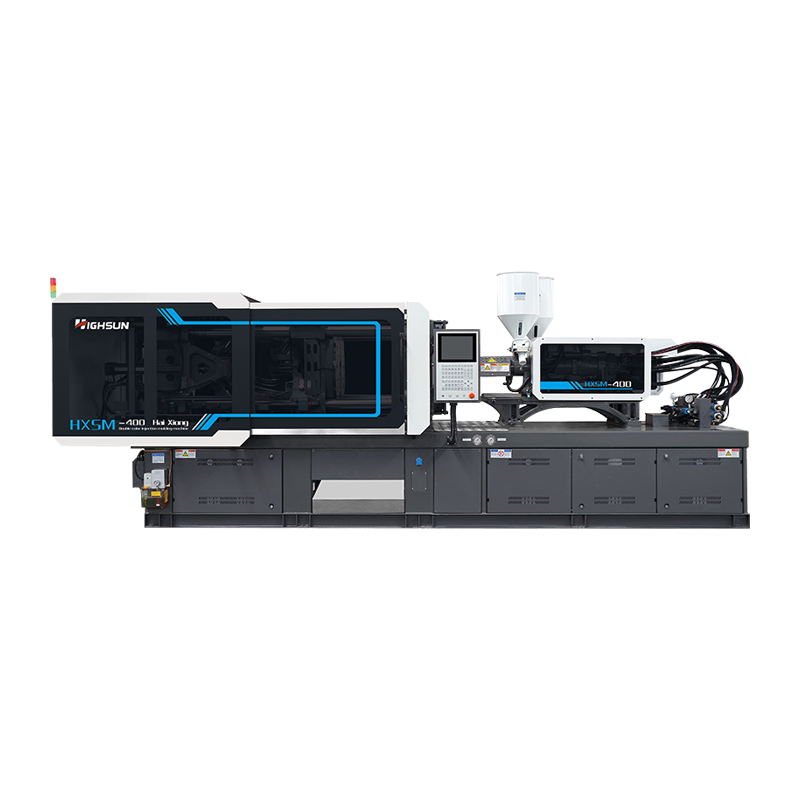
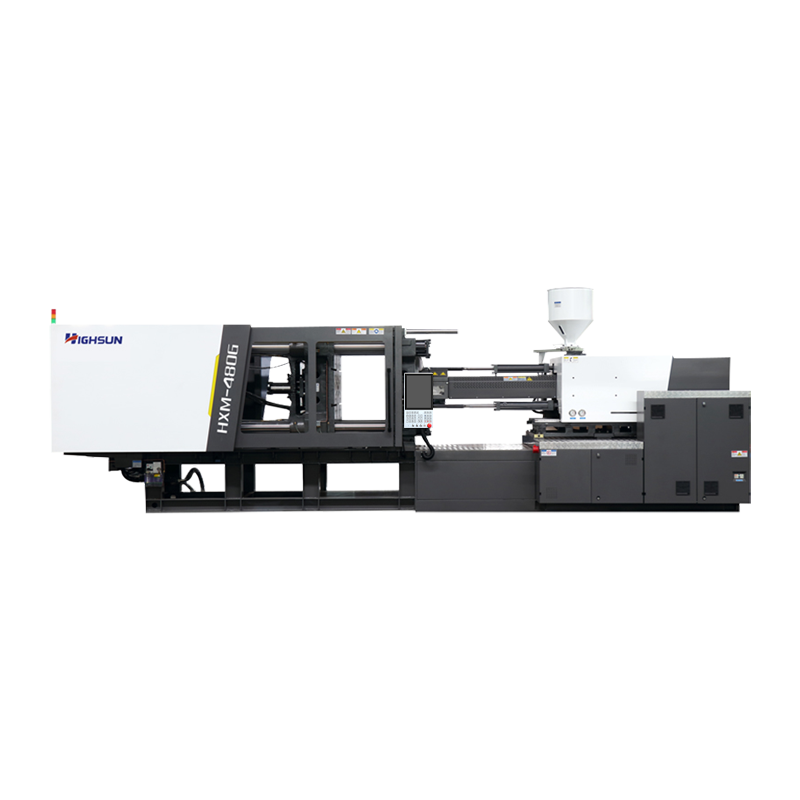
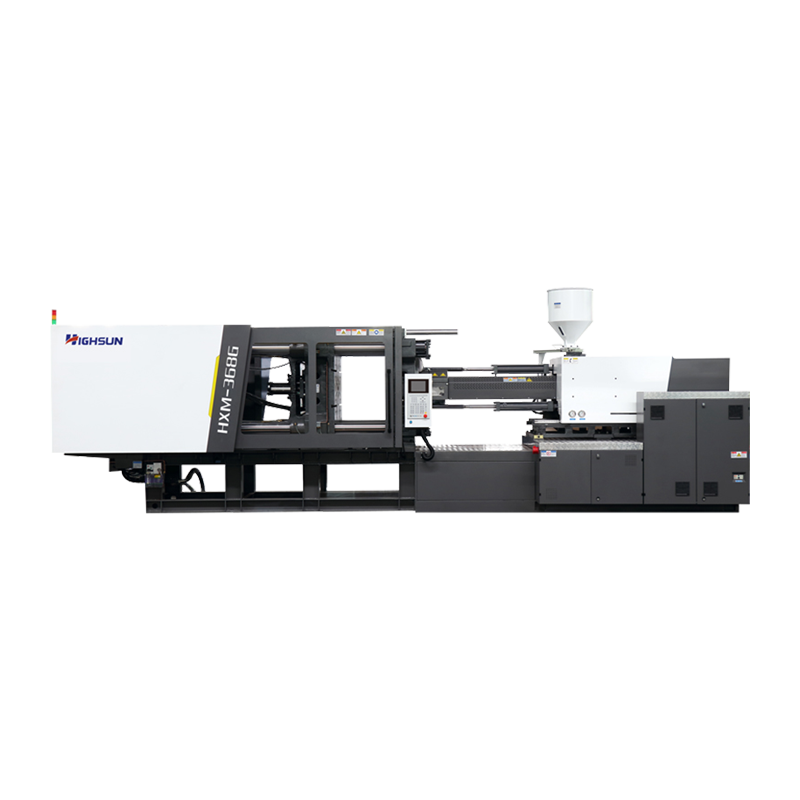
Servo-driven hydraulic machines are the default for general-purpose production. A servo motor drives the pump and adjusts output to actual demand, so energy use is far below a fixed-pump design. The HXM series covers 98 to 2,200 tons with closed-loop pressure control. For mid-size molds, the HXM258i servo injection molding machine is a realistic benchmark: enough clamp force for most industrial parts, a large platen, and a competitive per-part energy cost.
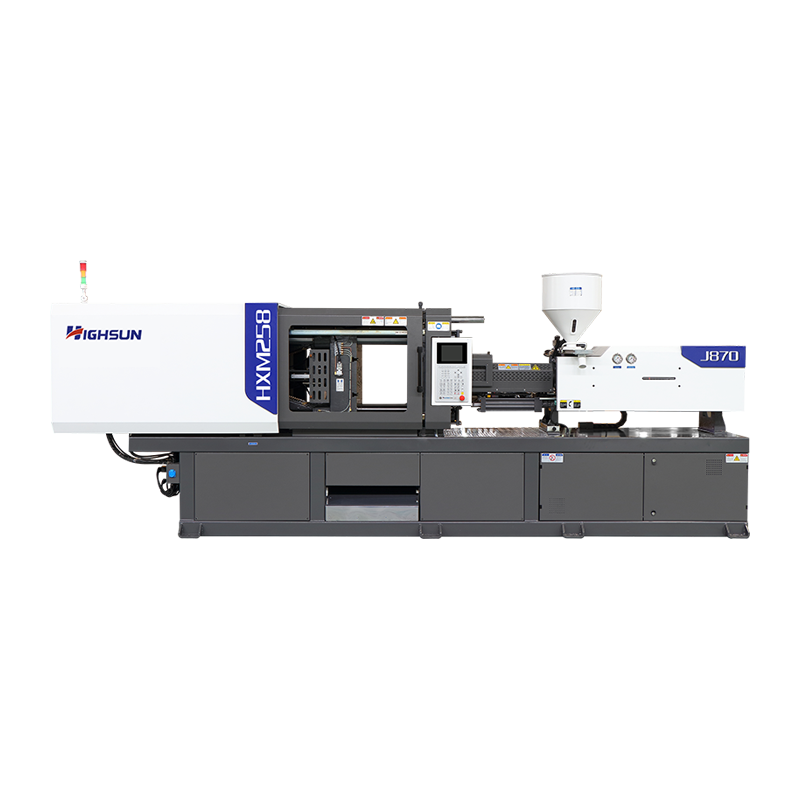 HXM258-I: HXM servo injection molding machine Suppliers, OEM/ODM Company - NingbNingbo beilun highsun machinery Co., ltd is top HXM258-I: HXM servo injection molding machine suppliers and OEM/ODM company in China, In ...View Product →
High-speed machines for thin-wall parts
High-speed machines are specified when the wall is thin and the resin freezes in under a second. Packaging products such as containers, lids, and thin-wall crates are typical. A dedicated HXH280 high-speed injection molding machine shortens fill time with a high-response injection unit and faster clamp movements, which is what actually beats a standard machine on thin-wall cycles.
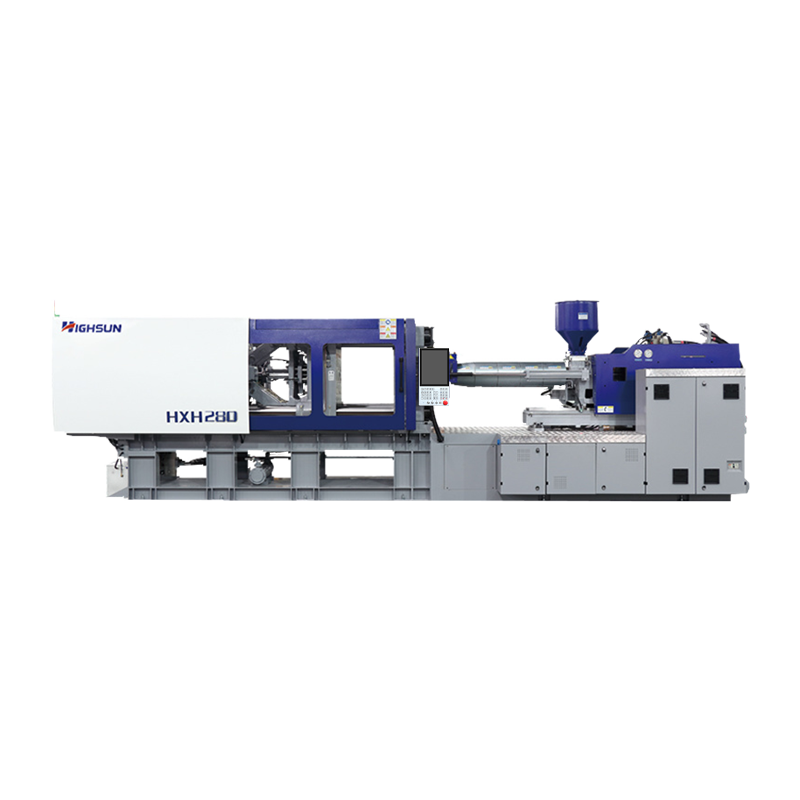 HXH280: HXH high-speed injection molding machine Suppliers, OEM/ODM Company - NiNingbo beilun highsun machinery Co., ltd is top HXH280: HXH high-speed injection molding machine suppliers and OEM/ODM company in China, ...View Product →
Two-color and hybrid machines
Two-color machines carry two injection units and rotate or shift the mold between them, forming two materials in a single cycle. Hybrid machines pair a servo-driven hydraulic pump with an electric screw drive, saving energy while keeping high hydraulic injection speeds.
Two-platen and all-electric machines
Two-platen machines shorten the footprint at high tonnage and dominate automotive panels and large pallets; the HXZ series covers 800 to 3,300 tons. All-electric machines remove hydraulic oil entirely for clean-room and optical parts where repeatability beats raw speed.
| Platform | Clamp force range | Best suited parts | Relative energy use | Relative precision |
|---|---|---|---|---|
| Servo hydraulic | 98 - 2,200 tons | General industrial parts | Low | High |
| High-speed | 280 - 450 tons | Thin-wall containers, lids | Medium | Medium to high |
| Two-color | 160 - 200 tons | Multi-material and two-color parts | Medium | High |
| Hybrid | 100 - 130 tons | Precision parts with fast cycles | Low | High |
| Two-platen | 800 - 3,300 tons | Large and deep parts | Medium | Medium |
| All-electric | Model dependent | Clean-room and optical parts | Lowest | Highest |
The radar chart below scores three of these platforms against five common selection criteria.
Process parameters: what actually controls part quality
Four groups of parameters control the result: temperatures, pressures, speeds, and times. They interact, so a shift in one usually requires a correction in another.
- Barrel temperatures set melt viscosity. Hotter melts flow better but degrade faster; semi-crystalline resins such as PA and POM have a narrow window.
- Mold temperature controls surface quality, weld strength, and cooling time. Hotter molds improve weld fusion but extend the cycle.
- Injection pressure and speed determine whether the cavity fills. Engineering resins typically need peaks of 1,200 to 2,000 bar, and thin walls need the highest speed before freeze-off.
- Holding pressure packs melt in to compensate for shrinkage. It is usually set 40% to 60% below the injection peak; too high flashes the part, too low creates sink marks.
- Holding time should last until the gate freezes. Longer holding wastes energy and adds stress.
Modern controllers log these values every cycle. A gradual drift in peak pressure or fill time is the earliest sign of mold wear or a worn non-return valve, and acting on the trend is cheaper than waiting for defects.
Materials change the machine, not just the recipe
Material selection is part of machine selection. The resin decides the screw geometry, barrel alloy, clamp force, and mold-temperature circuit.
| Material | Typical parts | Mold shrinkage | Typical mold temperature | Main process risk |
|---|---|---|---|---|
| PP | Containers, automotive interior parts | 1.0 - 2.5% | 20 - 60 C | Warpage |
| ABS | Housings, household products | 0.4 - 0.7% | 40 - 80 C | Sink marks |
| PA66 + 30% GF | Structural and mechanical parts | 0.3 - 1.0% | 80 - 120 C | Moisture degradation |
| PC | Transparent and impact parts | 0.5 - 0.7% | 80 - 120 C | Notch sensitivity |
| POM | Gears, sliding components | 1.8 - 2.5% | 80 - 100 C | Thermal degradation, gassing |
| PET (preform) | Bottle preforms, packaging | 1.2 - 2.0% | 10 - 25 C (chilled) | Haze, moisture sensitivity |
| PVC / CPVC | Pipe fittings, valves | 0.3 - 0.7% | 20 - 60 C | Corrosion, HCl release |
PET preforms show why a dedicated machine matters. The resin must be dried below 50 ppm moisture, injected at high speed to avoid crystallization haze, and cooled in a controlled preform mold. A purpose-built HXM208PET PET preform injection molding machine is the safer route when volume justifies a dedicated line.
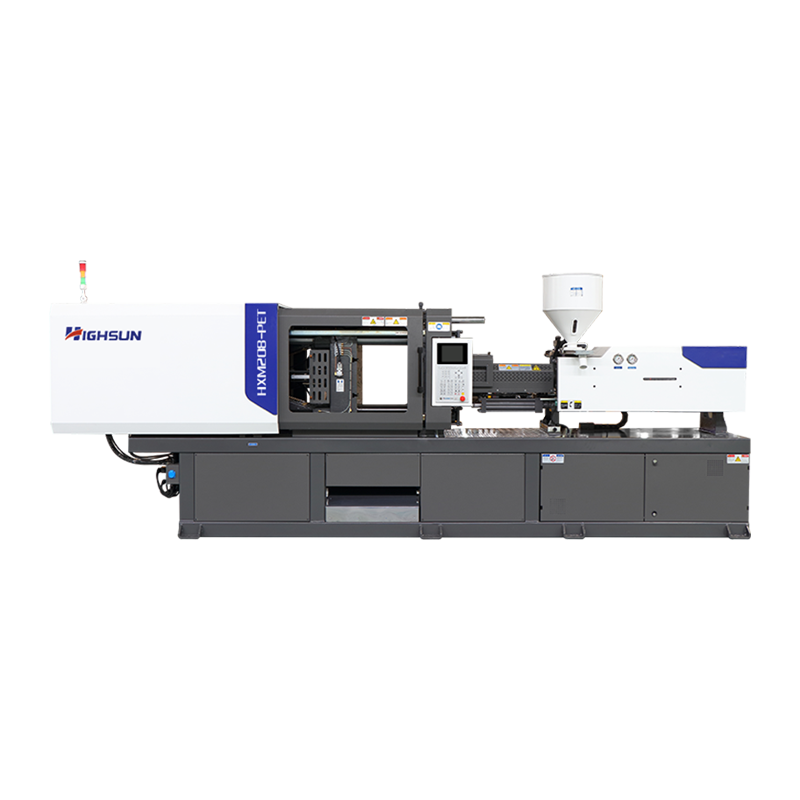 HXM208-PET: PET-preform injection molding machine Suppliers, OEM/ODM Company - NNingbo beilun highsun machinery Co., ltd is top HXM208-PET: PET-preform injection molding machine suppliers and OEM/ODM company in China,...View Product →
The same logic applies at the application level. A line molding household products has a different optimum than one running plastic logistics crates, where thick walls and high clamp tonnage dominate.
Common defects: root causes and practical fixes
Defects are almost never random. They are the signature of a drifted parameter or a part design that fights the process. The chart below ranks how often each defect appears in general molding shops.
- Sink marks: raise holding pressure and time, or cut rib thickness so the rib does not act as a heat sink.
- Flash: lower injection pressure at switchover, and check clamp force and the parting line.
- Warpage: balance the cooling circuit; uniform mold temperature beats a slightly colder, uneven one.
- Short shot: raise injection speed or melt temperature, and verify cavity venting.
- Weld lines: increase mold temperature and fill speed so the melt fronts fuse hotter.
- Burn marks: reduce fill speed near the end of fill and enlarge the final vents.
Energy efficiency: comparing drive systems with real numbers
Energy is usually the largest controllable operating cost in molding, and the drive system decides most of it. A fixed-pump hydraulic machine runs the pump at rated speed all cycle; a servo or electric machine consumes only what each phase demands.
The order of savings above is consistent across the industry; actual numbers depend on cycle and utilization. At USD 0.10 per kWh, a 500-ton servo machine on two shifts saves tens of thousands of dollars per year versus a fixed-pump machine of the same tonnage, and the payback is typically one to three years at high utilization.
Choosing the right technology: a practical buying framework
Choosing injection molding technology is a process of elimination. The sequence below prevents the most common specification errors.
- Define the part family: dimensions, weight, wall thickness, and annual volume.
- Calculate clamp force as projected area times cavity pressure, typically 300 to 600 bar for commodity resins, plus a 10% to 20% margin.
- Select the screw so the shot weight is between 20% and 80% of shot capacity.
- Check whether injection speed can fill the longest flow path before freeze-off.
- Compare precision, energy, and floor-space costs for toggle versus two-platen frames.
- Verify service logistics: spare parts, local technicians, and the builder's regional track record.
For a step-by-step walkthrough of the financial and technical checks, the key points for purchasing an injection molding machine cover the questions that a quote comparison tends to miss.
Frequently asked questions about plastic injection molding technology
These are the questions molders ask most often when evaluating a new machine.
Q1: What is the difference between a servo machine and a fixed-pump hydraulic machine?
A servo machine adjusts pump output to the real-time demand of each cycle phase, which saves roughly 40% energy and improves shot repeatability. A fixed-pump design runs at constant speed and pressure, so it wastes energy whenever demand is low.
Q2: Why does wall thickness dominate cycle time?
Because cooling time scales with the square of thickness. Doubling a wall thickness roughly quadruples the cooling time, which is why thin-wall parts cycle so much faster.
Q3: Can one machine mold both PVC and PET?
Not reliably with the same screw and barrel. PVC is corrosive and requires special alloys, while PET preforms need very high injection speed and strictly controlled drying and cooling.
Q4: What clamping force does a part actually need?
The clamp force equals the projected part area multiplied by the cavity pressure. Add 10% to 20% margin for process variation.
Q5: Which machine is best for thin-wall products?
A high-speed machine with a fast clamp and high injection response, such as the HXH series, is the standard choice for containers, lids, and thin-wall packaging.
Q6: What is the most important maintenance task?
Keep hydraulic oil clean and at a stable temperature. It protects the pump, servo components, and valve stack, and it prevents most unscheduled downtime.
Q7: Is energy saving alone a reason to replace a machine?
Only at high utilization. If the machine runs two shifts, a 40% to 60% energy saving usually pays back in one to three years, which makes replacement justified.
Q8: What is shot capacity and why does it matter?
Shot capacity is the maximum resin volume the screw can inject in one shot. Keeping the actual shot between 20% and 80% of that value protects melt quality and repeatability.
 +86-188 6861 6288
 haixiong@highsun-machinery.com
 No.36 Yongjiang South Road, Beilun District. Ningbo City, 315800, China