 ENG
ENG  English
 русский
 Español
 Português
 عربى
عربى


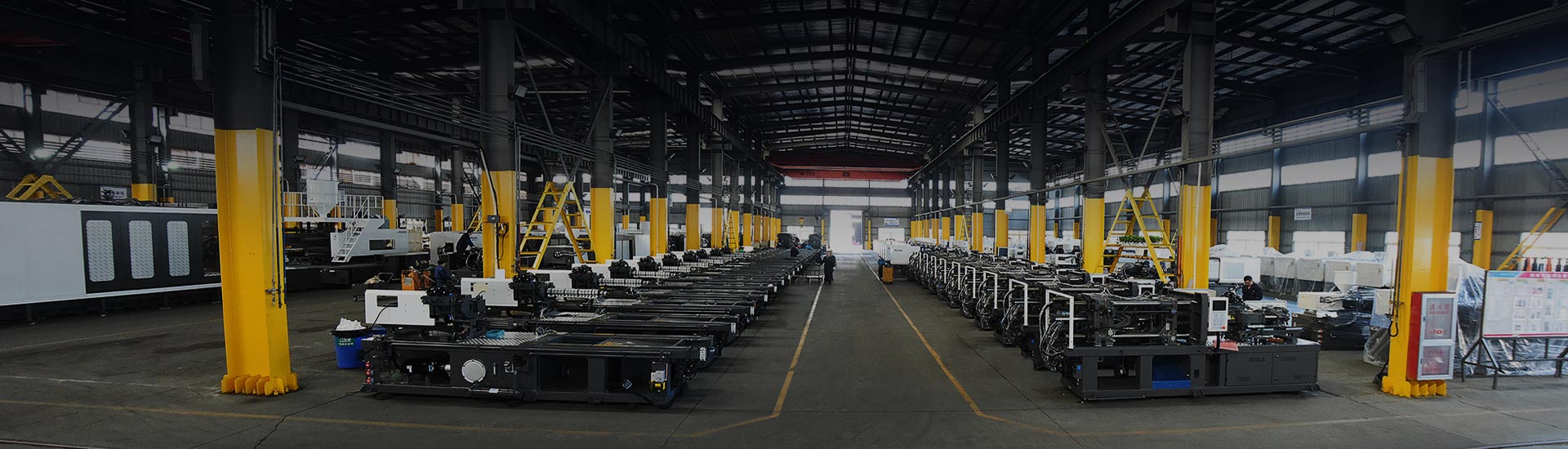
A PVC injection molding machine is a specialized plastic processing system engineered to melt, inject, and form polyvinyl chloride (PVC) compounds into precise, repeatable shapes within a closed mold. Unlike standard thermoplastic machines, a dedicated PVC injection machine incorporates corrosion-resistant barrel and screw materials, tightly controlled low-temperature processing zones, and modified screw geometry — all designed around PVC's unique sensitivity to heat degradation and its tendency to release hydrochloric acid (HCl) when overheated. The result is a machine capable of producing everything from rigid pipe fittings and electrical conduit components to flexible medical tubing and automotive cable sheaths with dimensional accuracy and surface quality that general-purpose machines cannot reliably achieve with PVC.
Understanding the machine's design logic — and the processing parameters specific to PVC — is essential for any manufacturer evaluating a PVC injection molding machine for a new production line, upgrading existing equipment, or troubleshooting chronic defects such as burning, brittleness, or surface discoloration.
Content
- 1 How a ePVC Injection Molding Machin Differs from Standard Equipment
- 2 PVC Injection Molding Temperature: The Most Critical Process Parameter
- 3 PVC Material Injection Molding Process: Step by Step
- 4 Common PVC Injection Molding Problems and Their Root Causes
- 5 Machine Type Selection: Hydraulic, Hybrid, and All-Electric for PVC
- 6 PVC Injection vs PVC Extrusion: Key Differences
- 7 Production Output Growth: PVC Injection Molded Parts Demand Trend
- 8 How to Choose a PVC Injection Molding Machine: Key Evaluation Criteria
- 9 Frequently Asked Questions
How a ePVC Injection Molding Machin Differs from Standard Equipment
PVC begins to degrade thermally at temperatures above 200°C — far lower than most engineering thermoplastics. This narrow processing window requires machine-level adaptations that go beyond simply lowering the barrel temperature setpoint. A purpose-built industrial PVC injection machine incorporates several design features absent from general-purpose equipment:
- Bimetallic barrel lining: Hardened iron-based alloy liners resist the corrosive HCl gas that PVC releases during thermal stress, extending barrel service life by two to three times compared to standard nitrided steel.
- Low-compression screw design: PVC screws use a compression ratio of 1.6:1 to 2.0:1, significantly lower than the 3:1 ratio common for polypropylene, to minimize shear-induced heat that would cause degradation before the melt reaches the nozzle.
- Chrome-plated screw flights: Smooth chrome surfaces reduce PVC adhesion and prevent material from stagnating at the screw root — a primary cause of degradation and black specks in finished parts.
- Large-bore nozzle geometry: PVC's relatively high viscosity demands a nozzle bore at least 30% larger than standard to prevent excessive shear heating at the nozzle tip.
- Precision multi-zone temperature control: Independent PID controllers on each barrel zone — typically four to five zones — allow a stable temperature gradient from feed zone to nozzle, critical for consistent melt quality with PVC.
- Corrosion-resistant mold clamping surfaces: Mold platens and tie bars are treated or coated to resist HCl attack during extended production runs.
These engineering choices collectively define a plastic injection molding machine for PVC as a distinct product category — not simply a re-configured standard machine. Operators who attempt to run PVC on unmodified equipment frequently encounter accelerated barrel wear, chronic burning defects, and unacceptably high scrap rates.
PVC Injection Molding Temperature: The Most Critical Process Parameter
PVC injection molding temperature management is the single greatest factor determining part quality and machine longevity. Both rigid PVC (RPVC) and flexible PVC (FPVC) have narrow melt temperature windows, and the optimal settings differ significantly between formulations. The bar chart below illustrates typical barrel zone temperature profiles for both material types across a five-zone machine configuration.
Typical barrel zone temperature settings for a 5-zone PVC injection machine; actual values vary by compound formulation, stabilizer package, and part wall thickness.
Rigid PVC operates in a barrel temperature range of 160°C to 190°C from feed zone to nozzle, while flexible PVC — which contains plasticizer that lowers melt viscosity — runs cooler at 150°C to 175°C. The ascending profile from feed to nozzle is deliberate: a low feed zone temperature prevents premature melting that would cause bridging and uneven feeding, while the higher nozzle temperature ensures adequate flowability for cavity filling. Exceeding 200°C at any zone, or holding the melt stationary for more than 5 minutes, initiates irreversible thermal degradation. Mold temperature is kept in the 20°C to 50°C range to promote rapid solidification and clean part ejection.
| Parameter | Rigid PVC | Flexible PVC |
|---|---|---|
| Barrel Temperature Range | 160–190°C | 150–175°C |
| Mold Temperature | 20–40°C | 30–50°C |
| Injection Pressure | 80–130 MPa | 60–100 MPa |
| Screw Speed | 20–60 rpm | 30–80 rpm |
| Back Pressure | 5–15 MPa | 3–10 MPa |
| Drying Required | Usually not required | Sometimes (60–70°C, 1–2 hr) |
| Max. Residence Time | <5 minutes at max temp | <5 minutes at max temp |
PVC Material Injection Molding Process: Step by Step
The PVC material injection molding process follows the same fundamental cycle as thermoplastic injection molding — plasticizing, injection, packing, cooling, ejection — but each stage demands PVC-specific parameter discipline. Understanding the sequence helps operators identify where in the cycle a defect originates.
- Material preparation: PVC compound (granules or dry-blend powder) is loaded into the hopper. A hopper dryer may be used for flexible compounds containing hygroscopic plasticizers. Pre-drying at 60–70°C for 1–2 hours reduces moisture-induced bubbles.
- Plasticizing: The rotating screw conveys material forward through progressively hotter barrel zones. Shear energy from the screw — combined with barrel heater input — melts the PVC. Screw speed is kept low (20–60 rpm for RPVC) to minimize shear-generated heat that could breach the 200°C degradation threshold.
- Injection: The screw advances linearly, pushing the molten PVC shot through the nozzle and into the closed mold at pressures between 80 and 130 MPa. Injection speed is moderate — too fast increases shear heating at the gate; too slow risks short shots and weld line weakness.
- Packing and holding: After cavity fill, reduced pressure is maintained to compensate for material shrinkage as PVC cools. PVC shrinkage rates for rigid formulations are 0.2–0.6%, significantly lower than polyolefins, making it suitable for dimensionally tight parts.
- Cooling: The mold's water-cooled channels extract heat from the solidifying part. Cooling time for PVC is typically 15–40 seconds depending on wall thickness. Premature ejection causes warpage; excessive cooling time reduces throughput without quality benefit.
- Ejection and purging: Parts are ejected by a mechanical pin or stripper plate system. If production is interrupted for more than 5 minutes, the barrel must be purged with a neutral resin (such as HDPE or ABS) to prevent PVC from degrading and contaminating subsequent shots.
Purging discipline is particularly important for PVC pipe fitting injection machine operations running multi-shift schedules. Any planned or unplanned downtime exceeding 5 minutes at processing temperature should trigger an immediate purge — a protocol that protects both the machine barrel and the quality of the first shots after restart.
Common PVC Injection Molding Problems and Their Root Causes
PVC injection molding problems are heavily concentrated around thermal management failures. The horizontal frequency chart below illustrates the relative occurrence of the most reported defects in industrial PVC injection operations, based on process engineering survey data from pipe fitting and electrical component manufacturers.
Relative defect frequency in PVC injection molding based on process engineering surveys across pipe fitting and electrical component production facilities.
Burning and discoloration represent nearly one-third of all reported defects — a clear signal that thermal management is the dominant quality challenge in PVC processing. PVC burning during molding is caused by one or more of the following: barrel temperature setpoints exceeding the compound's thermal stability window, excessive screw speed generating uncontrolled shear heat, stagnant material in dead zones of the barrel or nozzle, or prolonged residence time due to interrupted production. Each cause has a distinct corrective action, and the fix must address the root mechanism rather than simply lowering the overall temperature setpoint.
Bubbles and Voids in PVC Injection Parts
PVC injection bubbles originate from two distinct mechanisms that require different corrective actions. Gas bubbles — characterized by random distribution and irregular shape — result from moisture in the feedstock, volatile additives, or decomposition gases from early-stage thermal degradation. Vacuum voids — typically centered in thick wall sections and spherical in cross-section — result from insufficient packing pressure that fails to compensate for volumetric shrinkage during cooling. Diagnosing which type is present requires sectioning a defective part: if bubbles appear at the surface or in random locations, suspect moisture or gas; if they concentrate in the geometric center of thick features, increase packing pressure and check gate seal timing.
PVC Brittleness Causes and Prevention
PVC brittleness causes in injection-molded parts are frequently misattributed to the raw material when the actual driver is a process or formulation issue. Thermal degradation — even sub-visible degradation that produces no color change — reduces molecular chain length and eliminates the entanglement network responsible for PVC's toughness. A compound that has been even mildly over-processed will show brittle fracture under impact loads that the same compound would normally survive. Other brittleness causes include: insufficient plasticizer in flexible PVC formulations, incorrect stabilizer package for the processing temperature, and excessive regrind content (above 20%) that contains degraded polymer chains from previous cycles.
Machine Type Selection: Hydraulic, Hybrid, and All-Electric for PVC
Three drive technology platforms are available for PVC injection molding, each with distinct advantages across key performance dimensions. The radar chart below compares hydraulic, hybrid, and all-electric machine types across five criteria most relevant to industrial PVC applications.
Relative performance comparison across five criteria; scores represent general capability profiles, not absolute measurements.
Hydraulic machines dominate large-tonnage PVC pipe fitting production due to their superior clamping force capability at a lower initial investment. Hybrid machines — combining a servo-driven plasticizing unit with hydraulic clamping — offer an appealing middle ground for mid-tonnage applications where repeatability and energy consumption are under scrutiny. All-electric machines deliver the highest shot-to-shot repeatability, making them the preferred choice for precision PVC electrical components and medical devices, though their higher upfront investment and lower maximum clamping force limit their use in structural pipe fitting production. For most industrial PVC applications, a servo-hydraulic hybrid machine offers the most balanced profile of capability, energy efficiency, and cost of ownership.
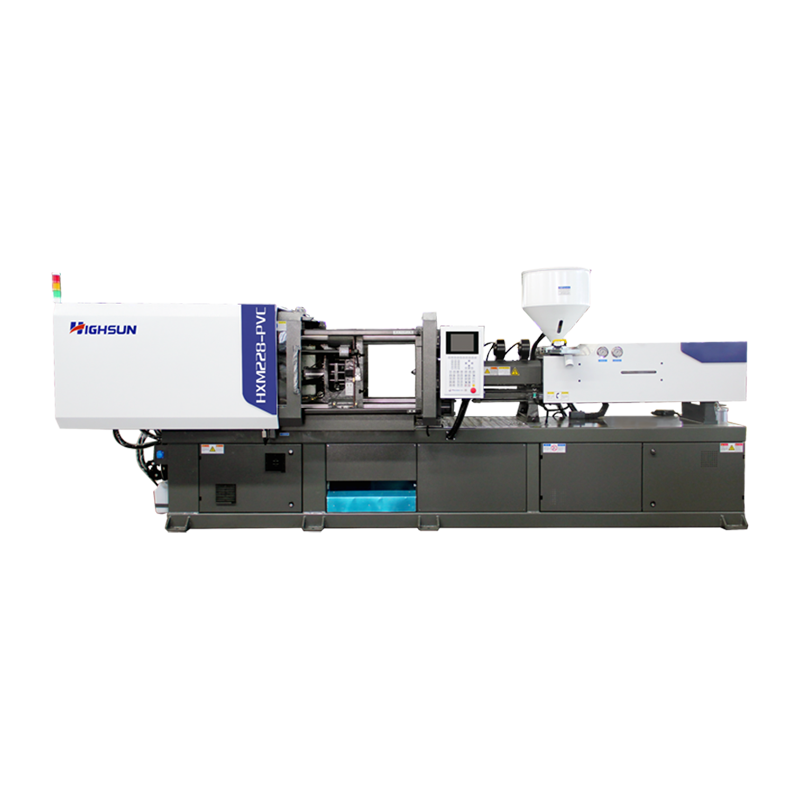
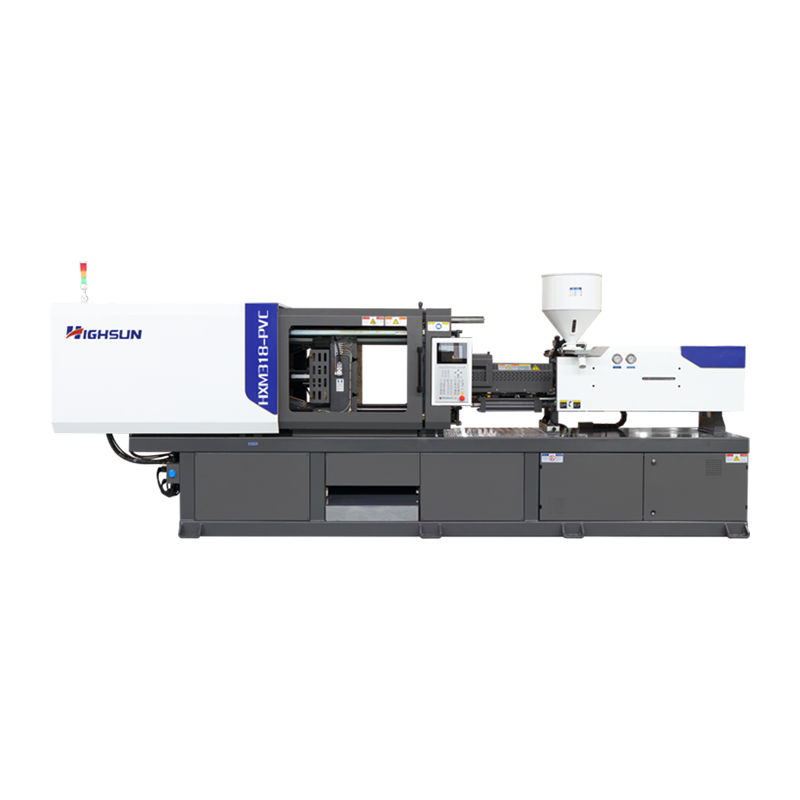
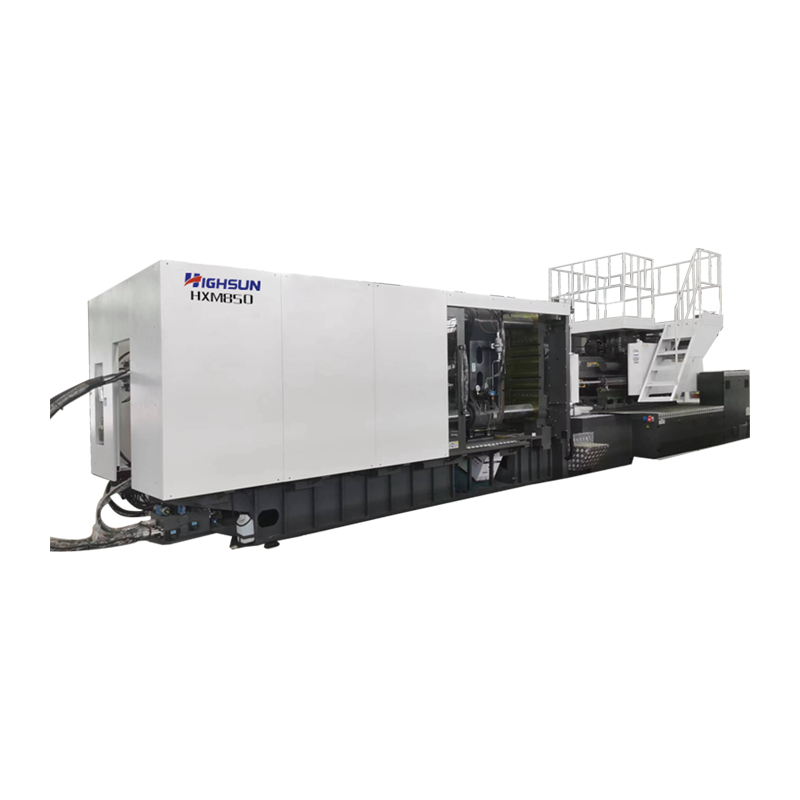
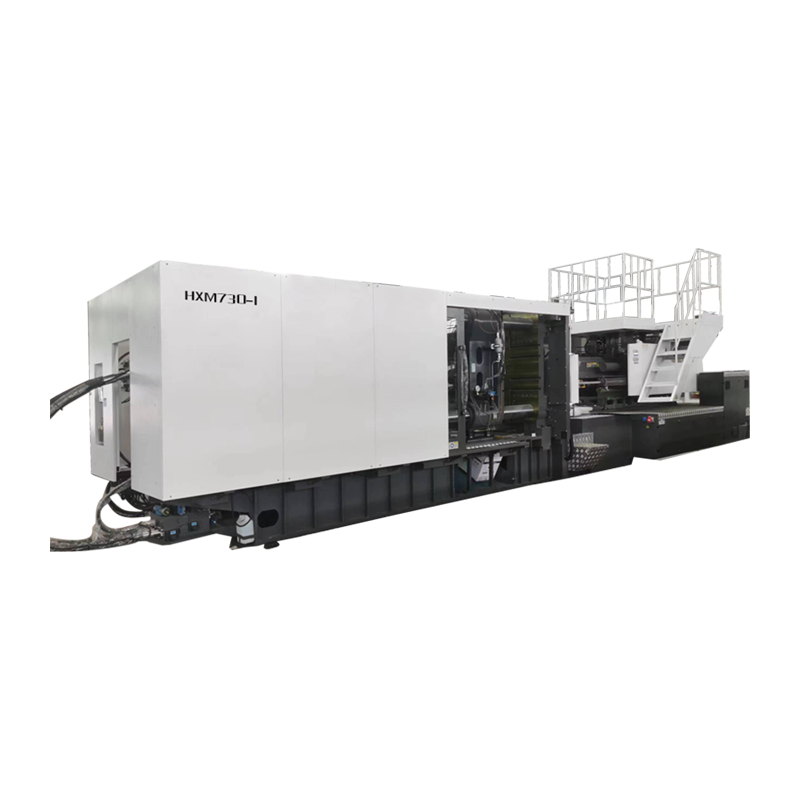
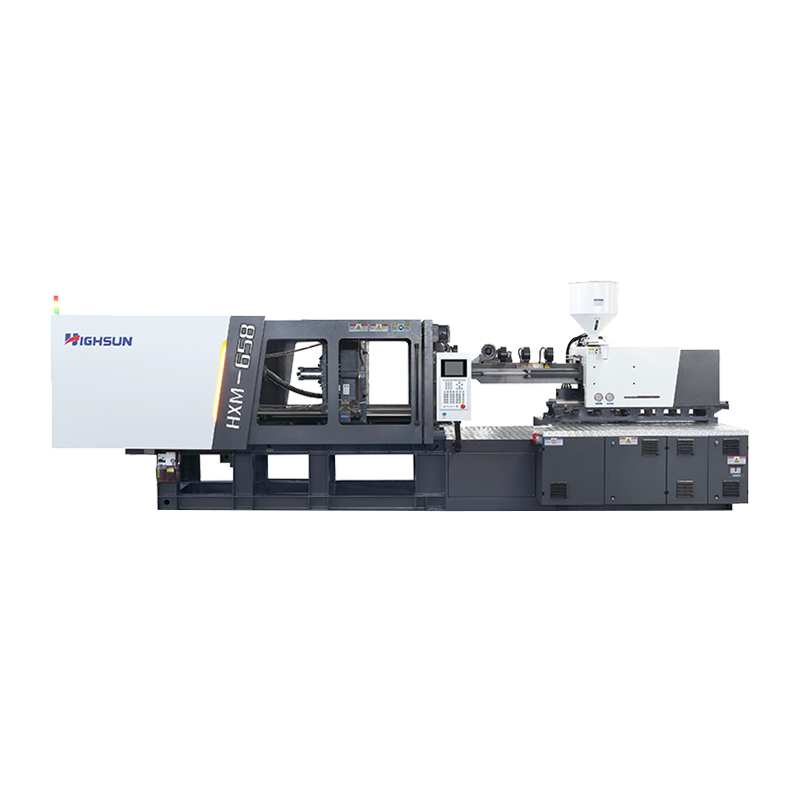
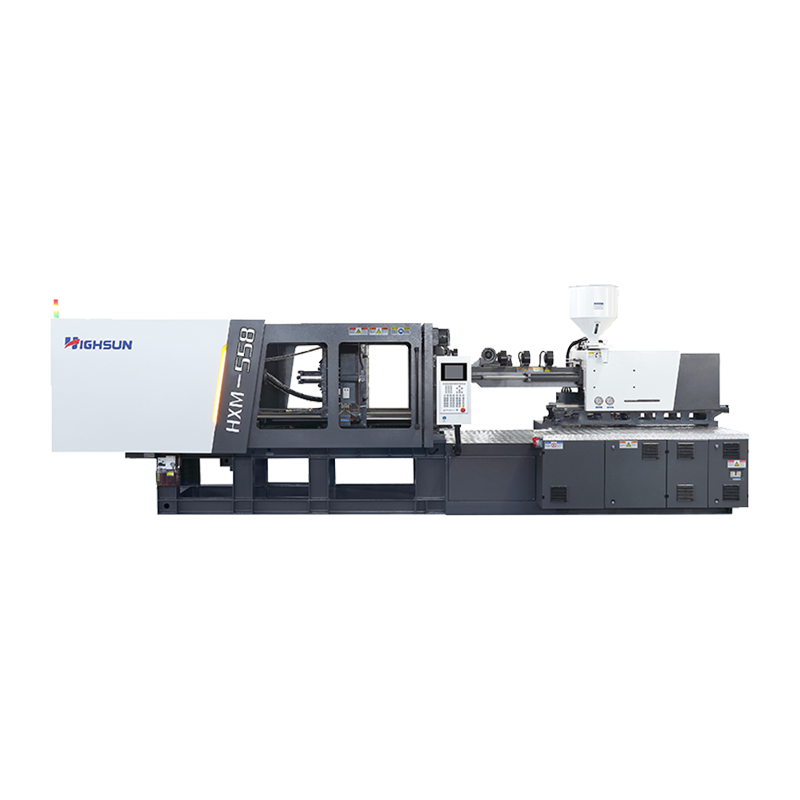
Ningbo Beilun Highsun Machinery Co., Ltd. (HIGHSUN MACHINERY), based in Beilun Science and Technology Park — located in Ningbo, Zhejiang, widely recognized as China's capital of plastic machines — has developed a characteristic series covering all three tonnage classes: small-tonnage hybrid machines, medium-tonnage toggle machines, and large-tonnage two-platen machines. This range allows customers to match machine architecture to application requirements rather than making compromises. As a professional PVC injection molding machine manufacturer and factory, HIGHSUN has been dedicated to zero-defect production philosophy and precision manufacturing since the company's establishment.
PVC Injection vs PVC Extrusion: Key Differences
PVC is processed by both injection molding and extrusion, and the choice between them is determined entirely by part geometry and production volume requirements — not by the material itself. Understanding the distinction helps procurement and engineering teams correctly specify equipment.
- Part geometry: Injection molding produces discrete, three-dimensional parts with complex geometry — fittings, connectors, housings, valves. Extrusion produces continuous linear profiles — pipes, tubes, channels, wire insulation — that are cut to length after formation.
- Production mode: Injection molding is a cyclic batch process; each shot produces one or more complete parts. Extrusion is a continuous process with higher steady-state throughput for linear parts.
- Tooling investment: Injection molds for PVC fittings typically cost more upfront than extrusion dies but enable greater geometric complexity. Die costs for extrusion are lower, but profile variety is constrained to cross-sectional shapes.
- Thermal management differences: Extrusion operates at a consistent throughput rate with steady-state thermal equilibrium. Injection molding subjects the melt to intermittent pressure pulses and variable residence times, making thermal degradation management more complex.
- Dimensional tolerance: Injection molding achieves tighter dimensional tolerances (±0.05–0.1mm) compared to extrusion (±0.1–0.5mm), making it the required process for sealing-critical components like threaded pipe fittings.
Production Output Growth: PVC Injection Molded Parts Demand Trend
Global demand for PVC injection-molded components — particularly pipe fittings, electrical conduit parts, and construction accessories — has grown consistently over the past decade, driven by construction sector expansion in Asia-Pacific and infrastructure rehabilitation programs in North America and Europe. The line chart below models this demand growth trend and its projected continuation through 2028, indexed to 2018 baseline output levels.
Demand index for globally produced PVC injection-molded components, indexed to 2018 baseline of 100; 2025–2028 values are projections based on construction and infrastructure investment trend data.
The brief demand contraction in 2020 reflects the construction sector disruption caused by the COVID-19 pandemic, but recovery was rapid with strong recovery in 2021 driven by infrastructure stimulus programs in multiple major economies. The projected compound annual growth rate of approximately 7–8% through 2028 is underpinned by urbanization-driven pipe fitting demand in South and Southeast Asia, PVC conduit requirements for renewable energy infrastructure, and growing adoption of PVC in automotive wire management systems. This demand trajectory justifies capital investment in dedicated industrial PVC injection machines with higher throughput and automation capability.
How to Choose a PVC Injection Molding Machine: Key Evaluation Criteria
Selecting a PVC injection machine supplier or machine model requires evaluating several interconnected factors. Getting this selection right at the specification stage prevents expensive retrofits and chronic quality issues in production.
- Clamping force: Determined by projected part area and cavity pressure. For PVC pipe fittings, typical injection pressure is 80–120 MPa, requiring clamping force of 1.5 to 2× the injection force on the projected area. Undersized clamping produces flash; oversized wastes energy.
- Shot size and L/D ratio: The machine's shot capacity should be 40–80% of the theoretical maximum — running at full shot size increases residence time and degradation risk. An L/D ratio of 20:1 to 22:1 is standard for PVC screws.
- Temperature control precision: Look for machines with ±1°C or better zone temperature control accuracy. PVC's narrow processing window makes this non-negotiable for consistent quality across shifts.
- Corrosion-resistant construction: Confirm bimetallic barrel lining, chrome-plated screw, and corrosion-treated platen surfaces as standard — not optional — on any machine designated for PVC service.
- OEM and customization support: For specialized applications — medical PVC, flame-retardant electrical compounds, or high-transparency formulations — an OEM PVC injection molding machine with application-specific screw geometry and control software delivers measurably better results than an off-the-shelf standard machine.
- After-sales service network: PVC processing generates hydrochloric acid gas that attacks internal surfaces over time. A supplier with accessible spare parts, application engineering support, and documented maintenance protocols protects the machine's service life and production uptime.
Frequently Asked Questions
Q1: Can PVC be injection molded?
Yes — both rigid and flexible PVC grades are routinely injection molded. The process requires a machine specifically configured for PVC with a corrosion-resistant barrel, low-shear screw, and precise multi-zone temperature control. With correct setup, PVC produces sharp-detail, dimensionally stable parts with low shrinkage.
Q2: What type of injection machine is used for PVC?
A dedicated PVC injection molding machine with a bimetallic barrel liner, chrome-plated low-compression screw (compression ratio 1.6:1 to 2.0:1), and large-bore nozzle. Machine type — hydraulic, hybrid, or all-electric — is selected based on part size, tonnage requirements, and precision demands of the application.
Q3: What is the difference between PVC injection and extrusion?
Injection molding produces discrete 3D parts (fittings, connectors, housings) in a cyclic process. Extrusion produces continuous linear profiles (pipes, tubes, wire jacketing) cut to length. Injection achieves tighter dimensional tolerances and more complex geometry; extrusion offers higher continuous throughput for simple cross-sectional profiles.
Q4: How to choose a PVC injection molding machine?
Evaluate clamping force based on projected part area, shot size relative to machine maximum (target 40–80%), screw L/D ratio (20:1 to 22:1 for PVC), temperature control precision (±1°C or better), corrosion-resistant construction as standard, and OEM customization capability for specialized compounds.
Q5: Why does PVC burn during injection molding?
PVC burns when melt temperature exceeds approximately 200°C for more than a few minutes, releasing hydrochloric acid and causing yellowing or black streaks. Root causes include excessive barrel temperature setpoints, high screw speed creating shear heat, stagnant material in dead zones, or prolonged residence time during production interruptions. Purging immediately upon downtime prevents degradation.
Q6: How to fix discoloration in PVC injection parts?
First identify whether the discoloration is yellow (early degradation — reduce temperature or screw speed), brown (moderate degradation — also check for dead zones), or black streaks (severe degradation or contamination — purge thoroughly and inspect nozzle and check ring for carbon deposits). Review the stabilizer package with your compound supplier if discoloration persists after process correction.
 +86-188 6861 6288
 haixiong@highsun-machinery.com
 No.36 Yongjiang South Road, Beilun District. Ningbo City, 315800, China