 ENG
ENG  English
 русский
 Español
 Português
 عربى
عربى


Content
- 1 What a Plastic Injection Molding Machine Does, in Short
- 2 Main Parts of a Plastic Mold Machine
- 3 The Plastics Injection Molding Process Step by Step
- 4 Types of Plastic Molding Machine by Drive and Structure
- 5 Highsun Injection Molding Machine Series at a Glance
- 6 How to Size Clamping Force and Shot Volume
- 7 Polyethylene and HDPE Injection Molding Processing Guide
- 8 Injection Mold Making Process
- 9 Injection Molding Guidelines for Part Design
- 10 Injection Molding Post Processing
- 11 Energy Use and Routine Maintenance
- 12 Where Industrial Plastic Molding Machines Are Used
- 13 Common Molding Problems and First Checks
- 14 Choosing a Plastic Molding Machine Supplier
- 15 Frequently Asked Questions
- 15.1 Q1. What are the 5 steps of injection molding?
- 15.2 Q2. Is there a PDF version of the injection molding design Guide available?
- 15.3 Q3. What are the typical rules and guidelines for injection moulding?
- 15.4 Q4. How does injection molding work step by step?
- 15.5 Q5. What is the difference between a plastic mold machine and the mold itself?
- 15.6 Q6. How do I choose the tonnage of an injection mold machine?
- 15.7 Q7. When is an all-electric machine a better choice than a hydraulic one?
- 15.8 Q8. Why must PET be dried before molding?
- 15.9 Q9. How long does a typical injection molding cycle last?
- 15.10 Q10. Can a plastic molding machine be customized?
What a Plastic Injection Molding Machine Does, in Short
A plastic injection molding machine melts plastic pellets, pushes the melt into a closed steel mold under controlled pressure, holds it while it cools, and then opens the mold to eject a finished part. Every plastic mold machine, whatever its size or drive type, repeats this same cycle of clamp, inject, hold, cool and eject. What changes from one machine to another is how the force is generated, how precisely each motion is controlled, and how large a part the machine can carry.
This guide covers the basics of plastic injection molding, the main parts of a plastic molding machine, the plastics injection molding process from pellet to packed part, and the way different machine families compare. It also covers clamping force sizing, resin settings for polyethylene and other materials, mold making, post processing, maintenance and troubleshooting. A full FAQ closes the article.
98T to 3000TClamping force range of the Highsun injection mold machine lineup
5 stagesClamp, inject, hold, cool, eject in each molding cycle
120000 sq mFactory area of Ningbo Highsun Plastic Machinery
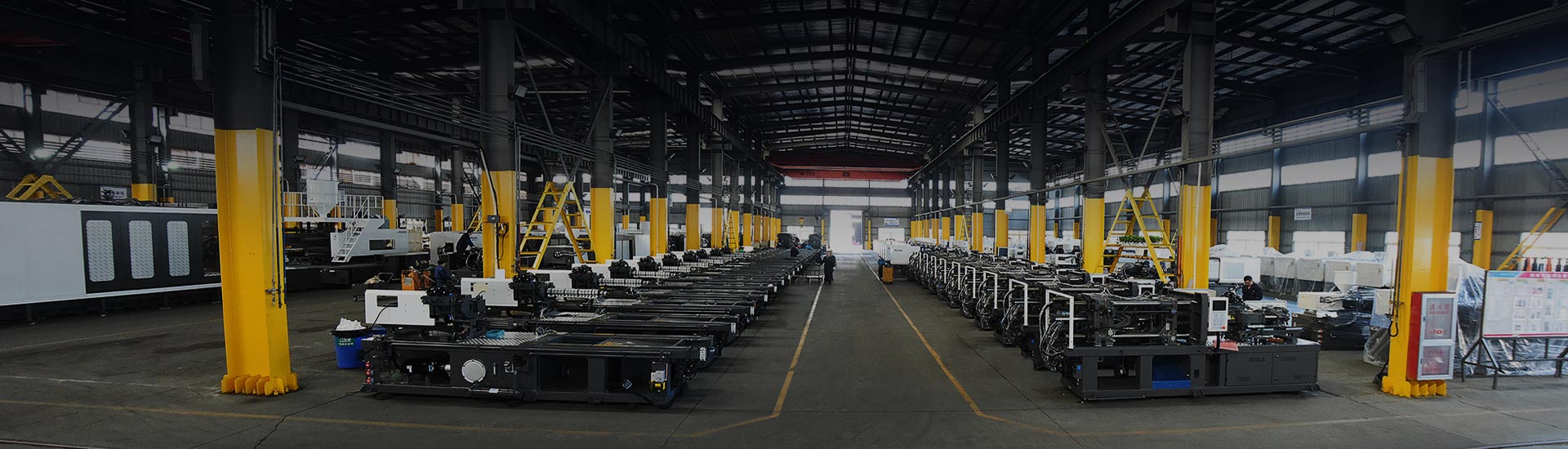
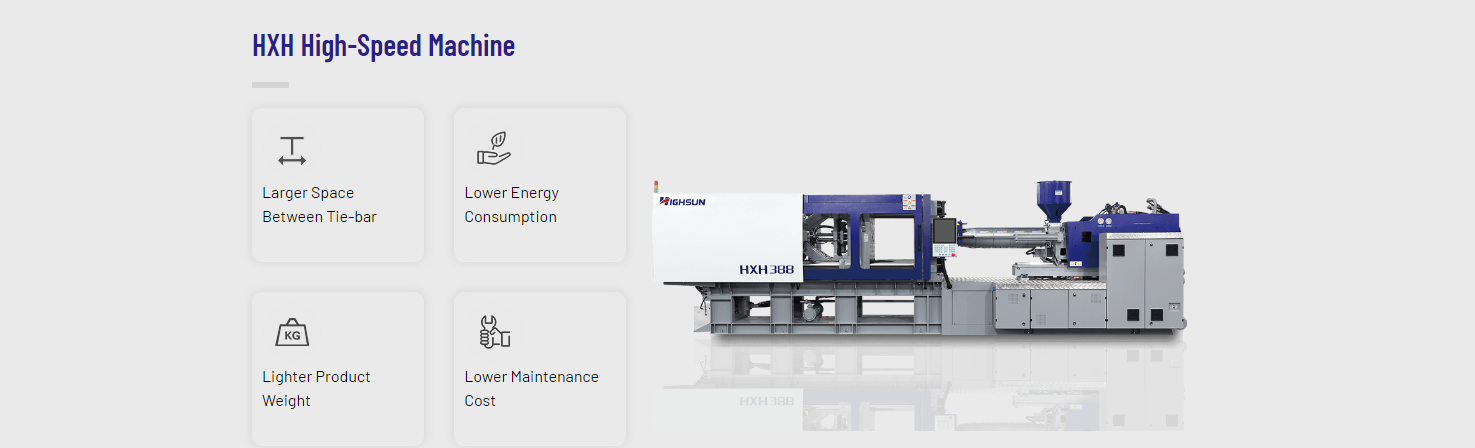
Ningbo Highsun Plastic Machinery Co., Ltd. is based in the Beilun Science and Technology Park in Ningbo, China, an area often called the capital of plastics machinery. The company builds HIGHSUN brand injection molding machines, has about 20 years of its own development history, and draws on more than 50 years of experience in its parent company. Its series include electric and oil hybrid, two-platen, high-speed, unmixed double color, mixed double color, BMC, PET and PVC machines, and it supplies customized solutions.
Main Parts of a Plastic Mold Machine
An industrial plastic molding machine has two working halves joined by a frame: the clamping unit that holds the mold shut, and the injection unit that melts and delivers the resin. A drive system and a controller coordinate both halves. The diagram below shows a simplified view with the five areas most buyers and operators talk about.
Parts and their jobs
- Hopper and dryer: holds pellets and feeds them to the barrel. Moisture sensitive resins such as PET need a dryer in front of the hopper.
- Barrel and screw: the screw rotates to convey, compress and melt the resin, then moves forward like a plunger to inject it. Heater bands along the barrel set the temperature zones.
- Mold: a steel tool with cavities that shape the part, cooling channels that remove heat, and an ejection system that pushes the part out.
- Clamping unit: platens, tie bars and a toggle or two-platen mechanism that keep the mold shut against injection pressure.
- Drive and controller: a hydraulic pump with servo motor, an electric drive, or a hybrid of both, managed by a controller that records and repeats the process settings.
The Plastics Injection Molding Process Step by Step
The manufacturing process steps for injection molded parts follow one order. Understanding each step makes it easier to tune a plastic injection machine and to find the cause of a defect when one appears.
- Material preparation. Pellets are dried when the resin requires it and loaded into the hopper together with color or additive masterbatch if needed.
- Clamping. The moving platen closes the mold and the clamping unit builds the holding force. Many machines slow down just before closing to protect the mold surface.
- Injection. The screw moves forward and fills the cavities. Speed and pressure are usually profiled in several stages to avoid jetting and burn marks.
- Packing and holding. Pressure is held while the gate freezes so extra melt can compensate for shrinkage. This stage controls sink marks and part weight.
- Cooling and plasticizing. The part cools inside the mold while the screw rotates backward and prepares the next shot. Cooling is normally the longest part of the cycle.
- Ejection. The mold opens and ejector pins or plates release the part, often to a robot or conveyor.
Cycle time reference. Highsun product documentation for PET preform machines gives a typical cycle of 6 to 20 seconds per shot, depending on cavity count, mold cooling design and machine tonnage. Thick walled parts in other resins usually run longer because cooling time grows quickly with wall thickness.
Types of Plastic Molding Machine by Drive and Structure
The right plastic molding machine depends on part size, tolerance, material and the energy profile of the plant. The table lists the main families, followed by a radar chart that compares three of them on five characteristics.
| Machine family | Force source | Typical strength | Typical use |
|---|---|---|---|
| Servo hydraulic toggle | Servo motor with hydraulic pump | Balanced speed, force and energy use | Household goods, appliances, general parts |
| All-electric | Servo motors with ball screws | Positioning accuracy, clean operation | Electronics, medical, precision parts |
| Hybrid | Electric injection with hydraulic clamp | Fast injection with strong clamping | Thin wall and packaging parts |
| Two-platen | Direct hydraulic clamping | Compact length, even force on large molds | Automotive panels, crates, large housings |
| Two-color | Two injection units with rotary platen | Two materials or colors in one cycle | Soft touch grips, multi-color covers |
Higher scores sit further from the center. The chart shows why no single plastic mold injection machine fits every job: an all-electric machine scores high for precision and clean running but lower for very large parts, while a two-platen machine scores high for large molds and moderately on speed and precision.
Highsun Injection Molding Machine Series at a Glance
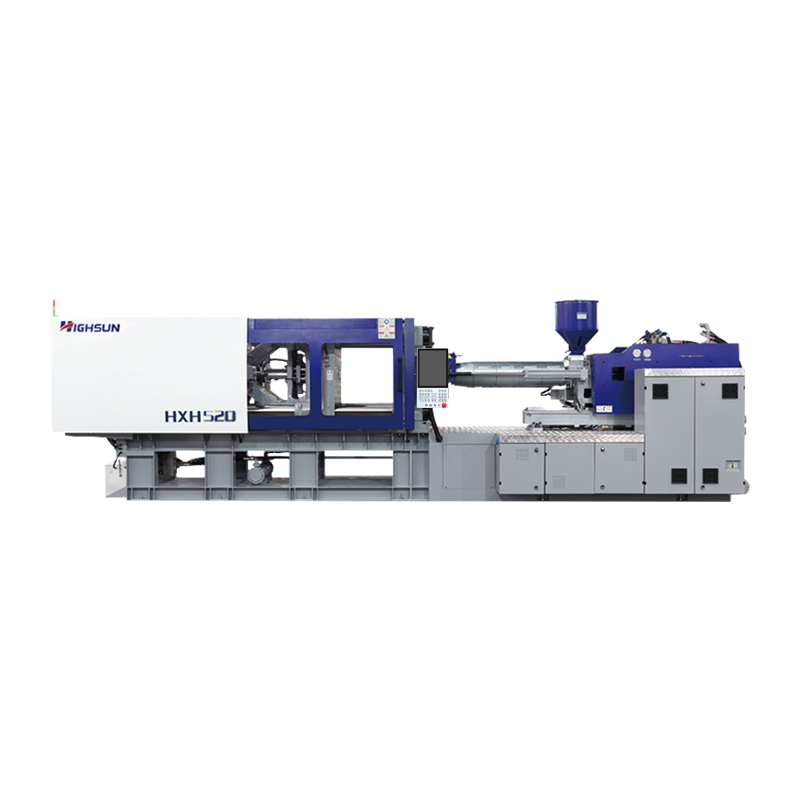
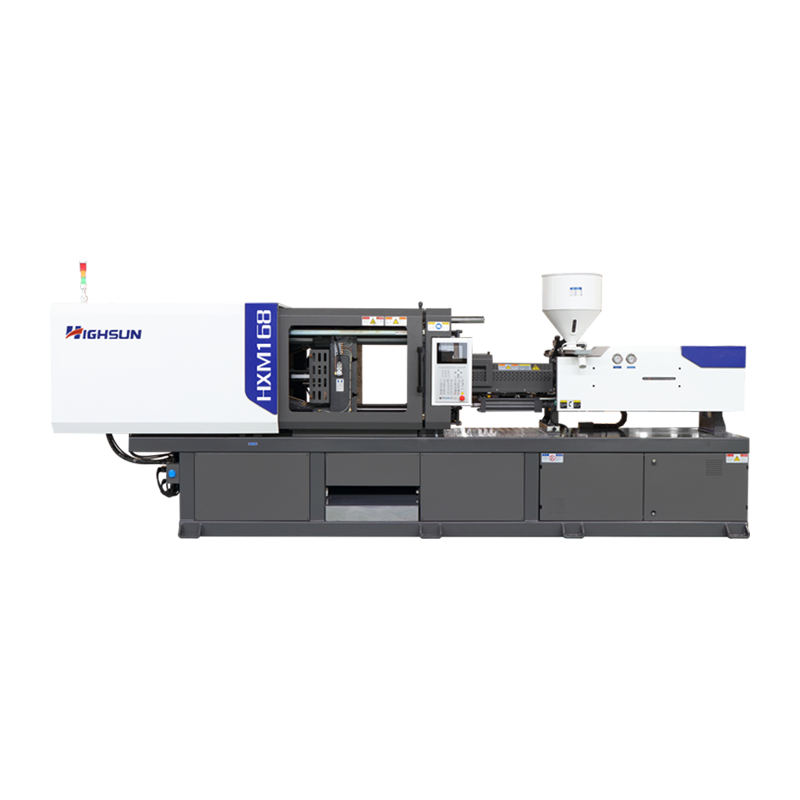
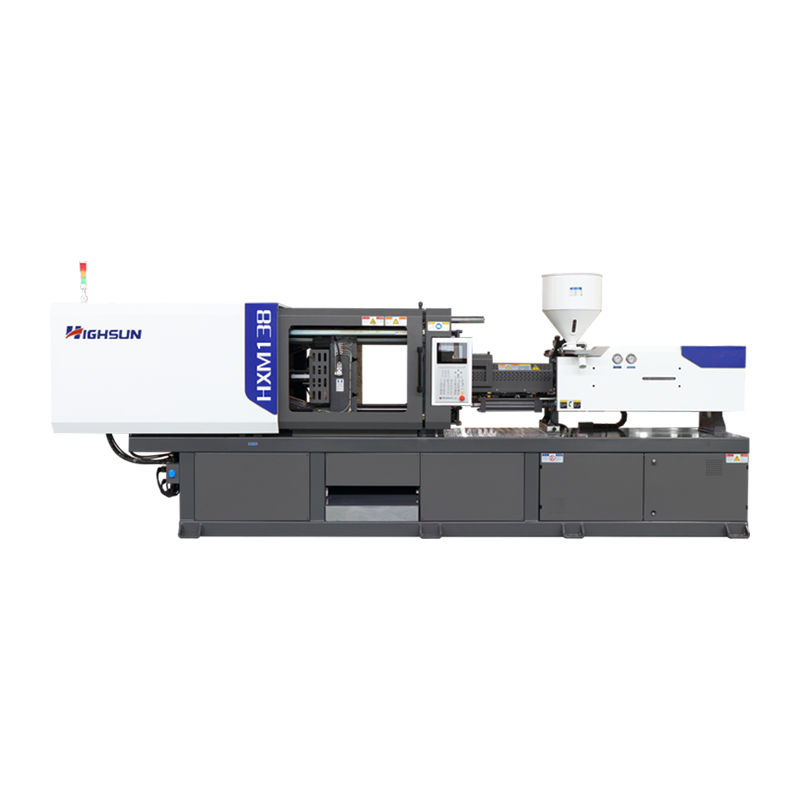
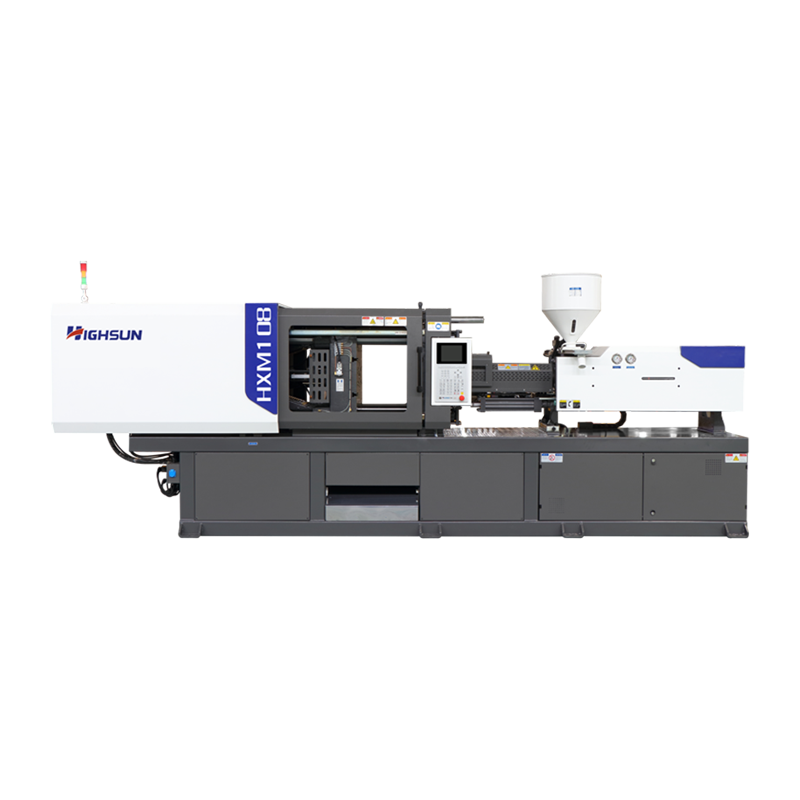
The cards below summarize four series from the Highsun product page. Details come from the manufacturer's own series descriptions, so confirm exact specifications for a given model with the supplier before planning a line.
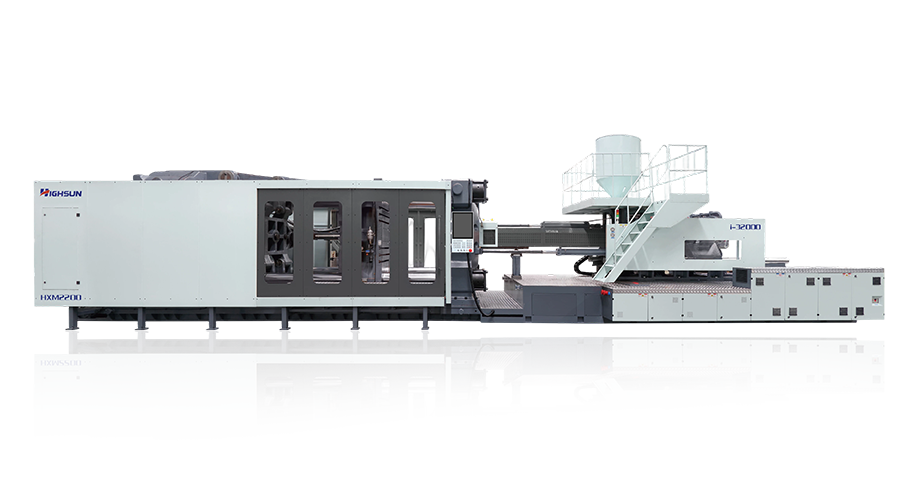
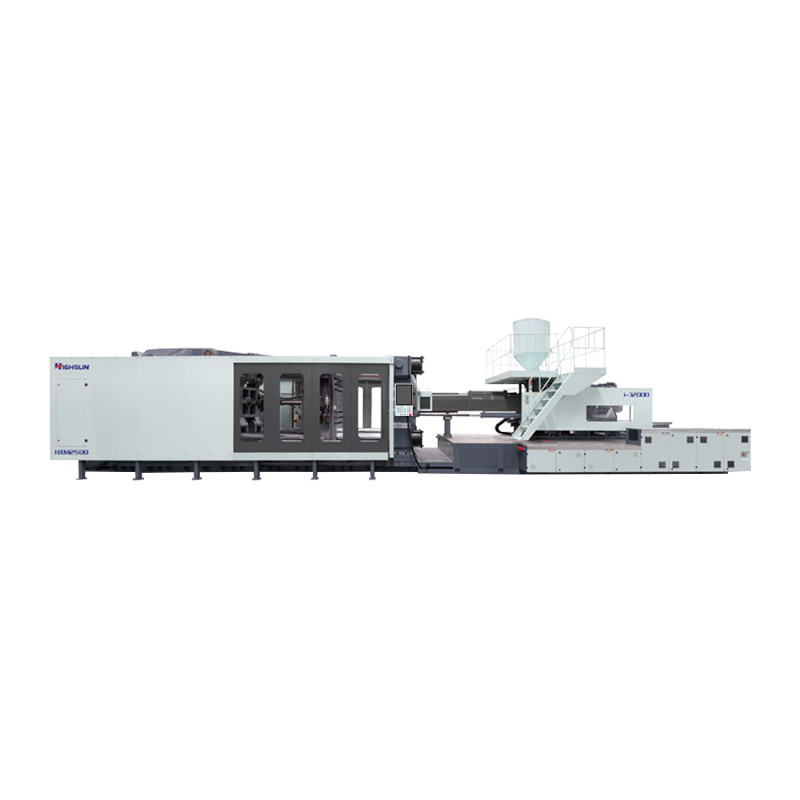
HXM Servo Machine
A servo driven plastic injection machine range from 98T to 2500T, with a T-type high-rigidity platen system and full linear guides that Highsun lists with a repeat positioning accuracy of 0.01 mm.
View HXM series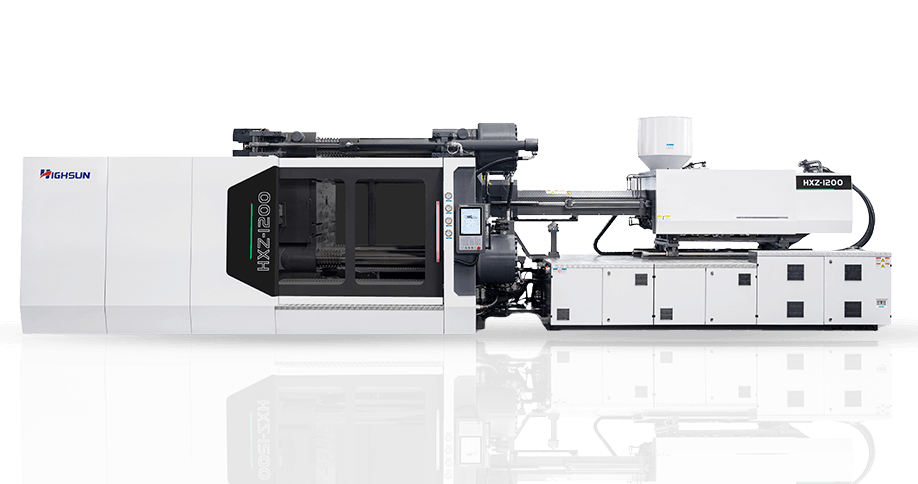
HXZ Two-platen Machine
A compact large tonnage design for deep cavity products, with direct and evenly distributed clamping force. Models listed on the series page run from 800T to 2400T.
View HXZ series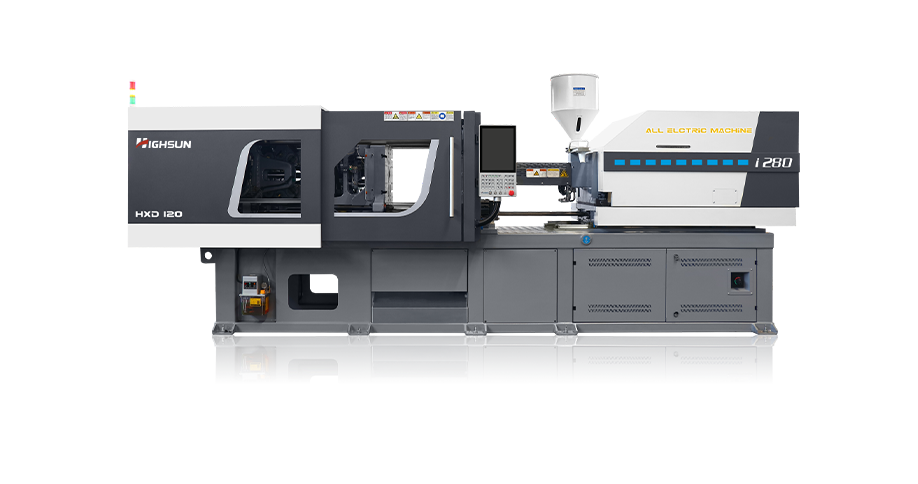
HYD All-Electric Series
Full servo motor control for precise positioning, fast response and a cleaner production area. Highsun lists low-pressure clamping protection to help extend mold life.
View HYD series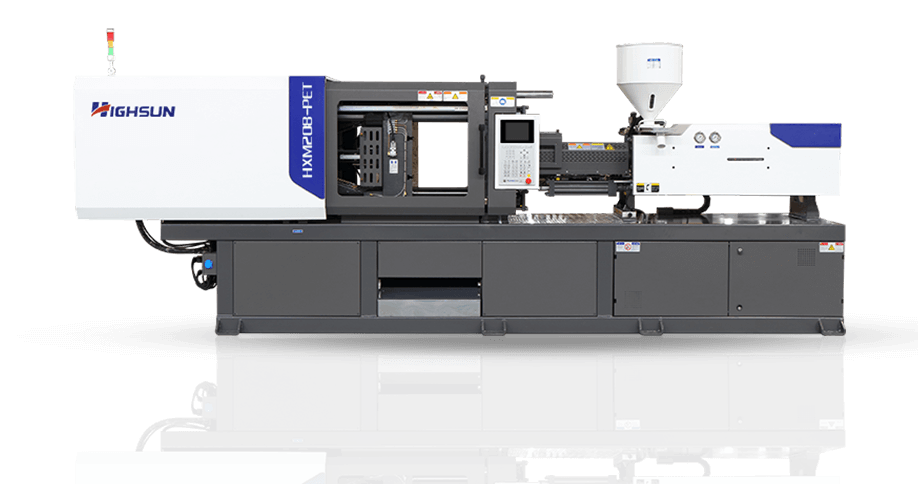
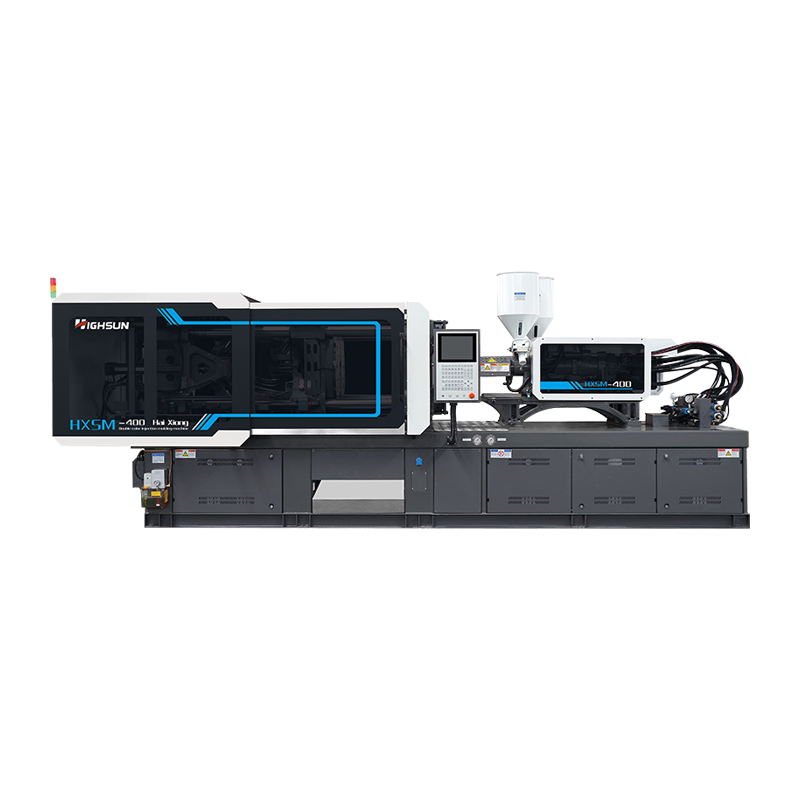
PET Preform Machine
Built around PET with a longer L/D screw, a dedicated cooling circuit and a stronger ejection system for multi-cavity preform molds. Listed models run from 208T to 558T.
View PET seriesHow to Size Clamping Force and Shot Volume
The clamping force of an injection mold machine must exceed the force that the melt exerts on the mold, which equals cavity pressure multiplied by the projected area of the parts and runners. Selecting a machine that is too small allows flash at the parting line, while a machine that is much too large wastes floor space and energy.
A worked example
Projected area: 20 cm by 20 cm = 400 cm2 = 40000 mm2
Average cavity pressure: 40 MPa (400 bar)
Separating force: 40 N/mm2 x 40000 mm2 = 1600 kN, about 163 tons force
With a 10% to 20% margin: about 180 to 195 tons, so a 200T class machine is a reasonable starting point
Cavity pressure depends on resin, wall thickness and flow length. Thin walled parts and long flow paths need higher pressure, and many shops use commonly quoted rules of thumb for each material before they confirm with a mold flow study or a trial.
Other sizing checks
- Shot size: the part weight plus runner weight should usually sit between about 20% and 80% of the barrel capacity so the resin does not stay too long in the barrel.
- Tie bar spacing: the mold must fit between the tie bars, and the platen size must support the mold base evenly.
- Opening stroke and daylight: the machine must open far enough to release the tallest part and let a robot reach in.
- Plasticizing rate: the screw must melt enough resin within the cooling time of the cycle.
Polyethylene and HDPE Injection Molding Processing Guide
Polyethylene is one of the most common resins for crates, caps, buckets and household items. A basic polyethylene injection molding processing guide starts with melt temperature, then mold temperature, then packing. HDPE is semi-crystalline, so it shrinks more than amorphous resins and needs even cooling to limit warpage.
HDPE injection molding processing points
- Barrel temperature commonly sits in the range of about 180 to 240 degrees C, rising from the feed zone to the nozzle.
- Mold temperature is kept moderate, and cooling channels are balanced so one side of the part does not shrink faster than the other.
- Packing pressure and time should continue until the gate freezes to limit sink marks on thick sections.
- Ribs and thick bosses are designed with uniform wall transitions to reduce warpage.
- Large flat items such as crates benefit from a stiff clamping unit and balanced gating, which is one reason two-platen and heavy toggle machines are used for them.
| Resin | Drying need | Shrinkage tendency | Watch for |
|---|---|---|---|
| HDPE and PP | Low | High | Warpage and sink marks |
| ABS | Moderate | Low to moderate | Surface streaks from moisture |
| PET | High | Low | Haze, silver streaks, viscosity loss |
| PA66 | High | Moderate | Moisture pickup after molding |
| PVC | Low | Low | Heat degradation and corrosion |
PET and PVC are examples of resins that call for specialized equipment. Highsun documentation describes PET machines with a PET-optimized screw and a dedicated cooling circuit, and PVC machines with a special cylinder, precise temperature control and anti-degradation protection.
Injection Mold Making Process
The mold decides part quality as much as the machine does. The injection mold making process moves from part design to a tested tool, and a mold that is well matched to its plastic injection machine runs with less adjustment.
A
Design review
The part model is checked for wall thickness, draft angles, undercuts and gate position. Changes at this stage cost far less than changes after steel is cut.
B
Mold layout
Cavity count, runner type, cooling circuits and ejection method are selected. Hot runner systems suit high volume work, and cold runners suit simpler tools.
C
Machining
Cavities and cores are cut by milling, electrical discharge machining and grinding, then polished or textured to the surface specification.
D
Assembly and fitting
Plates, slides, lifters and cooling lines are fitted, and the parting line is blued and adjusted until it closes evenly.
E
Trial and correction
The mold runs on a machine, sample parts are measured, and gate size, venting and cooling are corrected until parts hold their dimensions.
F
Release to production
Final settings are recorded in the controller so the next setup repeats the same process window.
Injection Molding Guidelines for Part Design
These injection molding guidelines are widely used starting points. They help any plastic molding process run with fewer defects, and they apply no matter which injection machine produces the part.
Walls and ribs
- Keep wall thickness as uniform as the design allows.
- Make transitions between thick and thin areas gradual.
- Keep rib thickness at about half to two thirds of the wall it joins to limit sink marks.
- Round inside corners to lower stress and improve flow.
Draft and release
- Add draft on walls that face the pull direction, commonly one degree or more.
- Textured faces need extra draft.
- Avoid undercuts unless a slide or lifter is planned.
- Place ejector pins on thick, strong areas.
Gating and venting
- Gate into the thickest section so packing reaches it.
- Place weld lines away from loaded or visible areas.
- Vent the last areas to fill so air can escape without burn marks.
- Balance runners for multi-cavity tools.
Process settings
- Fill the cavity at the speed the resin tolerates, then switch to packing.
- Record temperature, pressure and time for each stage.
- Change one setting at a time during adjustment.
- Allow the process to stabilize for several cycles before measuring parts.
Injection Molding Post Processing
Injection molding post processing covers everything done to a part after it leaves the mold. Many parts need very little, but some applications call for several finishing steps, and planning them early prevents surprises at the end of the line.
- Degating and trimming: removing sprues and runners by hand, with cutters, or with an automatic station.
- Deflashing: removing thin flash at the parting line, which also signals that the mold or clamping needs attention.
- Annealing and conditioning: controlled heating or moisture conditioning to relieve stress, used for some engineering plastics.
- Assembly joining: ultrasonic welding, heat staking, screws or snap fits.
- Decoration: pad printing, hot stamping, painting or labeling.
- Inspection and packing: dimension checks, visual checks and packing that protects the surface.
Robots and conveyors connected to the machine can handle degating, stacking and packing in line, which keeps part handling consistent from cycle to cycle.
Energy Use and Routine Maintenance
Servo driven hydraulics and electric drives reduce energy use because the motor delivers power only when a movement needs it. Highsun product information states that servo energy-saving systems can cut power use by 30% to 70% compared with conventional hydraulic equipment, depending on the process and load. Actual savings differ by product, cycle and material, so a trial run with the plant's own mold gives the most reliable comparison.
| Interval | Task | Purpose |
|---|---|---|
| Every shift | Check oil level, oil temperature and leaks | Stable pressure and early leak detection |
| Weekly | Lubricate guides and toggle points | Smooth motion and lower wear |
| Monthly | Inspect filters, cooling lines and heater bands | Clean oil and even temperature control |
| Quarterly | Check platen parallelism and tie bar condition | Even clamping force and mold protection |
| Yearly | Inspect screw and barrel wear, recalibrate sensors | Consistent melt quality and shot accuracy |
Highsun maintenance guidance for its two-platen machines also lists platen parallelism checks, tie bar monitoring and hydraulic oil replacement based on operating hours. Follow the manual of the specific machine for intervals and fluid grades.
Where Industrial Plastic Molding Machines Are Used
An industrial plastic molding machine serves a wide range of markets. The Highsun application pages group them as follows, and each group places different demands on tonnage, speed and cleanliness.
Automotive parts
Bumpers, interior panels and trim made on large toggle and two-platen machines.
Home appliances
Housings, panels and drawers with good surface finish.
Household products
Containers, furniture and storage boxes in polyolefin resins.
PET preforms
Bottle preforms made with dedicated PET machines and multi-cavity molds.
PVC and CPVC fittings
Pipe fittings processed with special cylinders and tight temperature control.
Medical parts
Precision components that benefit from clean, repeatable electric drives.
3C electrical
Housings and connectors for electronic products.
Logistics and thin wall
Crates, pallets and fast cycle thin wall packaging.
Common Molding Problems and First Checks
When a defect appears, start with the material and the process settings before changing the mold. The table lists frequent problems with the first items to check.
| Defect | Likely cause | First check |
|---|---|---|
| Flash | Low clamping force or worn parting line | Clamping force, injection pressure, mold fit |
| Short shot | Insufficient melt or restricted flow | Shot size, melt temperature, venting, gate |
| Sink marks | Packing too low or thick sections | Packing pressure and time, gate freeze |
| Warpage | Uneven cooling or shrinkage | Mold temperature balance, cooling time |
| Silver streaks | Moisture in the resin | Dryer temperature, dew point, drying time |
| Burn marks | Trapped air or excess heat | Vents, injection speed, melt temperature |
Choosing a Plastic Molding Machine Supplier
A supplier decision covers more than the machine on the floor. Ask about the full tonnage range, control system features, spare parts supply, commissioning support and the ability to adapt a machine to special needs such as longer screws, larger platens or robot interfaces. Ask for a trial with the actual mold when possible.
Ningbo Highsun Plastic Machinery builds machines from 98T to 3000T and works on customized solutions, which helps when a plant needs one supplier across several part types. Product brochures for the HXM, HXZ and other series are available from the product pages, and the Highsun team can discuss sizing for a specific mold and resin.
Frequently Asked Questions
Q1. What are the 5 steps of injection molding?
The five steps are clamping, injection, holding or packing, cooling, and ejection. Plasticizing for the next shot happens during cooling.
Q2. Is there a PDF version of the injection molding design Guide available?
This article is published as a web page. Machine brochures in PDF form are listed on the Highsun product pages, and the supplier can send design and sizing notes on request.
Q3. What are the typical rules and guidelines for injection moulding?
Keep walls uniform, add draft, round inside corners, gate into thick sections, vent the last areas to fill, and dry hygroscopic resins before molding.
Q4. How does injection molding work step by step?
Pellets are melted in the barrel, injected into a clamped mold, packed and cooled, and the finished part is ejected when the mold opens.
Q5. What is the difference between a plastic mold machine and the mold itself?
The machine supplies clamping force, melt and pressure. The mold is the tool that gives the part its shape and is mounted between the platens.
Q6. How do I choose the tonnage of an injection mold machine?
Multiply cavity pressure by projected area, convert to tons force, and add a margin of about 10% to 20%. Also check tie bar spacing and shot size.
Q7. When is an all-electric machine a better choice than a hydraulic one?
All-electric machines suit precision and clean room style work with small to medium parts. Hydraulic and two-platen machines suit large molds and high clamping force.
Q8. Why must PET be dried before molding?
PET absorbs moisture readily, and wet resin causes haze, bubbles, silver streaks and lower viscosity in the finished preform.
Q9. How long does a typical injection molding cycle last?
Cycles range from a few seconds for thin wall parts to a few minutes for thick or large parts. PET preforms commonly run 6 to 20 seconds per shot according to Highsun documentation.
Q10. Can a plastic molding machine be customized?
Many suppliers adapt screws, platens, control options and automation interfaces. Highsun states that it accepts and supplies customized solutions.
 +86-188 6861 6288
 haixiong@highsun-machinery.com
 No.36 Yongjiang South Road, Beilun District. Ningbo City, 315800, China