 ENG
ENG  English
 русский
 Español
 Português
 عربى
عربى


Two-color injection molding machines in 2026 have reached a decisive performance threshold: cycle times are down by up to 28% versus 2022 platforms, all-electric servo drives cut energy use by an average of 22% per shot, and AI-assisted process controllers now hold part-weight variation within ±0.3% on glass-filled engineering polymers—without operator intervention. If your production line runs multi-material or dual-tone components in PC, PA, POM, ABS, or TPE, the current generation of 2K machines delivers a measurable ROI that earlier equipment could not justify.
This article cuts through marketing claims to give you concrete data on the latest drive technologies, machine platforms, material compatibility, and real-world production gains—along with a buying framework and FAQ to support your next capital decision.
Content
- 1 What a Two-Color Injection Molding Machine Actually Does
- 2 2026 Technology Advances That Change the ROI Calculation
- 3 Leading Machine Platforms Compared: 2026 Specifications
- 4 Engineering Plastic Material Compatibility: What Bonds, What Doesn't
- 5 Cycle Time and Productivity Gains: Real Production Data
- 6 Industries and Applications Driving Demand in 2026
- 7 Buying Framework: Selecting the Right 2K Machine for Your Production Line
- 8 Frequently Asked Questions About Two-Color Injection Molding Machines
- 8.1 Q1: What is the minimum production volume that justifies a dedicated 2K machine versus outsourcing or two-press assembly?
- 8.2 Q2: Can existing single-shot injection molds be converted for use on a 2K machine?
- 8.3 Q3: How do 2K machines handle materials with very different processing temperatures, such as PA66 (280°C) over-molded with LSR (190°C injection temperature)?
- 8.4 Q4: What causes delamination between the two materials, and how is it prevented?
- 8.5 Q5: Is it possible to run a 2K machine in single-color mode when 2K demand is low?
- 8.6 Q6: What maintenance intervals and consumable costs are specific to 2K machines compared to standard injection molding equipment?
What a Two-Color Injection Molding Machine Actually Does
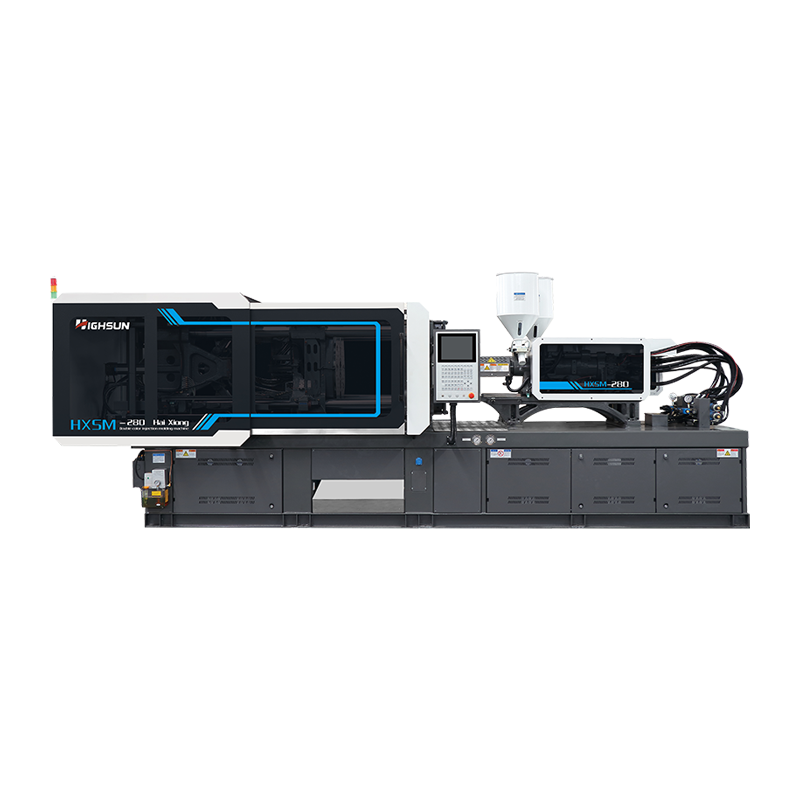
A two-color (2K) injection molding machine injects two different materials—or two colors of the same material—into a single mold during one continuous machine cycle, producing a fully bonded finished part without secondary assembly. The mold typically rotates or indexes between a first and second injection station; the substrate from shot one is transferred automatically and over-molded in shot two.
This is fundamentally different from insert molding (which requires manual loading) or post-mold assembly (which adds labor and adhesive failure risk). Core advantages:
- Eliminates a secondary press, assembly cell, and associated labor—typically saving $0.08–$0.22 per part in high-volume automotive trim programs.
- Achieves substrate-to-overmold bond strengths exceeding 18 MPa on PA66/TPE combinations—stronger than adhesive bonding.
- Dimensional consistency: no cumulative tolerance stack from multiple operations.
- Enables functional integration—sealing lips, damping ribs, optical windows—co-molded into a single BOM line item.
The global 2K molded parts market is forecast to grow at a CAGR of 6.8% through 2030, driven by EV interiors, wearable medical devices, and premium consumer electronics—all engineering-polymer-intensive sectors.
2026 Technology Advances That Change the ROI Calculation
All-Electric and Hybrid Servo Drives
The transition from hydraulic to all-electric or hybrid servo systems is the most impactful shift of the current machine generation. Leading OEMs—Engel, Arburg, Sumitomo Demag, Fanuc, and KraussMaffei—now ship 2K platforms where all injection, clamping, and rotation axes are servo-electric. Documented production benefits include:
- Energy savings of 40–65% versus equivalent hydraulic presses (Sumitomo Demag IntElect 2 field data, 2025).
- Injection position repeatability of ±0.005 mm, critical for thin-wall optical and medical parts.
- Dry cycle times 18–25% faster than hydraulic equivalents through parallel axis movement.
AI-Assisted Process Control
Machine intelligence has moved from static recipe storage to real-time adaptive control. Engel's iQ weight control and Arburg's aXw Control ScrewPilot analyze melt viscosity fluctuations shot-by-shot and auto-correct injection speed and switchover point. In controlled trials with 30% glass-filled PA66, these systems reduced part-weight variation from ±1.8% to ±0.3%—a 6× improvement with zero operator input.
High-Speed Rotary Platen Systems
The rotary platen—which transfers the first-shot substrate to the second injection station—is now torque-motor driven on all premium platforms. KraussMaffei's GX series achieves 180° rotation in under 0.9 seconds for clamp forces up to 650 tonnes, versus 1.6–2.0 seconds on 2020-era models. That 0.7-second saving compresses cycle time by 8–12% on typical 7–9 second cycles without changing any melt or cooling parameter.
Conformal Cooling and Variotherm Integration
Conformal cooling channels—increasingly produced via metal additive manufacturing—are now paired with variotherm (rapid heat/cool) systems as a standard option. For optical-grade PC components, this combination achieves surface gloss above 95 GU (gloss units) and eliminates weld lines at the material interface without post-polishing, removing a costly secondary operation.
Leading Machine Platforms Compared: 2026 Specifications
The table below compares the four most widely specified 2K machine platforms as of early 2026, covering clamp range, drive type, rotation speed, and control system generation.
| OEM / Platform | Clamp Range (tonnes) | Drive Type | Platen Rotation (180°) | AI Control System | Typical Energy Use (kWh/1k shots) |
|---|---|---|---|---|---|
| Engel duo 2F | 300–5,500 | Hydraulic / ecodrive | 1.1 s (500T) | iQ weight control | 19 |
| Arburg Allrounder 1120 H | 200–6,500 | Hybrid servo | 1.0 s (600T) | aXw Control | 17 |
| KraussMaffei GX 650-8100 | 350–650 | All-electric | 0.9 s (650T) | APC plus Gen3 | 14 |
| Sumitomo Demag IntElect 2 | 50–500 | All-electric | 1.0 s (500T) | activeFlowBalance | 14 |
Engineering Plastic Material Compatibility: What Bonds, What Doesn't
Material pairing is the critical process design decision in 2K molding. Incompatible pairs delaminate; poorly matched shrinkage rates warp thin walls. The chart below shows market share of substrate materials used in 2K production lines in 2025.
The table below summarizes proven and problematic pairings for the most common engineering substrates:
| Substrate (Shot 1) | Overmold (Shot 2) | Bond Mechanism | Typical Bond Strength | Application Example |
|---|---|---|---|---|
| PC/ABS | Transparent PC | Chemical / thermal | >20 MPa | Automotive instrument panel |
| PA66 (30% GF) | TPE-A | Chemical | 18–22 MPa | Power tool grip |
| ABS | TPE-S (SEBS) | Mechanical / chemical | 12–16 MPa | Consumer device housing |
| POM | TPU | Mechanical only | 6–9 MPa (undercut required) | Gear/seal assembly |
| PP | TPE-O (EPDM-PP) | Chemical | 14–18 MPa | Automotive weatherstrip |
Critical rule: POM and PP are non-polar and do not chemically bond to most overmold materials. For these substrates, design mechanical interlocks (undercuts, through-holes, dovetails) or specify compatibilized overmold grades. Attempting a purely chemical bond on POM without undercuts is the leading cause of delamination field failures in 2K programs.
Cycle Time and Productivity Gains: Real Production Data
The following line chart tracks average cycle time reduction across three production programs that upgraded from 2020 to 2026 machine generations. Programs span automotive, medical, and consumer electronics sectors.
Across all three programs, cumulative cycle time reduction from 2020 to 2026 ranges from 24% to 28%. At a 24-hour, 330-day production schedule on an 8-cavity tool, a 2.5-second cycle reduction on a 10-second baseline translates to approximately 4.7 million additional parts per year per machine—without adding shifts or equipment.
Industries and Applications Driving Demand in 2026
The demand profile for 2K machines is concentrated in four sectors, each with distinct material and precision requirements:
- Electric Vehicle Interiors: Door panels, steering wheel surrounds, and HVAC bezels combining PC/ABS structural substrates with soft-touch TPE overmolds. EV programs have replaced painted trim with 2K parts at a rate of 12% year-over-year since 2022, eliminating VOC emissions from paint lines.
- Medical and Wearable Devices: Implant-adjacent housings in biocompatible PC with LSR (liquid silicone rubber) overmolds for skin contact. Bond integrity must meet ISO 10993 biocompatibility; modern 2K machines with cleanroom-compatible designs now achieve Class 7 in-mold environments.
- Consumer Electronics: Smartphone frames, laptop hinges, and earable housings using dual-material combinations for structural rigidity plus acoustic damping or antenna transparency windows.
- Power Tools and Industrial Handles: Long the core market for 2K, with PA66 or PP structural cores and TPE-A or TPE-V gripping surfaces. Ergonomic certification programs increasingly require >15 MPa bond strength at 80°C service temperature—a spec only chemical bonding achieves reliably.
Buying Framework: Selecting the Right 2K Machine for Your Production Line
A structured evaluation prevents over-specifying on clamp force or under-specifying on control system capability. Use this decision sequence:
- Define your clamp force requirement with a 10–15% safety margin over the calculated projected area × cavity pressure value. Undersizing clamp is the most common costly mistake in 2K tool design.
- Confirm your material pairing against the OEM's validated combination matrix before committing to a machine platform. Not all machines support LSR or high-temperature PEEK overmolding without a special barrel package.
- Evaluate rotation mechanism type: rotary platen (best for high-cavitation, symmetric molds), index plate (compact footprint, suited for asymmetric parts), or core-back (no rotation required, but limited to specific geometries).
- Assess AI control system generation: Gen 2 (adaptive injection) vs Gen 3 (full closed-loop including mold breathing and thermal management). For engineering polymers with tight viscosity windows, Gen 3 is recommended.
- Calculate all-in energy cost at your production volume using the manufacturer's kWh/1,000 shot specification. At $0.12/kWh and 8M shots/year, the difference between 19 kWh and 14 kWh per 1,000 shots is approximately $4,800 per year per machine—a 5-year NPV that favors all-electric at almost any realistic price premium.
- Request a mold trial with your actual material on the candidate machine before purchase commitment. Viscosity curves and shrinkage data from suppliers do not perfectly predict machine-specific behavior.
Frequently Asked Questions About Two-Color Injection Molding Machines
Q1: What is the minimum production volume that justifies a dedicated 2K machine versus outsourcing or two-press assembly?
The break-even point depends on part complexity and per-piece savings, but most cost models place the threshold at 250,000–400,000 parts per year. Below that volume, the capital cost of the machine and dedicated 2K tooling (typically 40–60% more expensive than single-material tooling) is not recovered within a standard 3–4 year payback window. Above 500,000 parts per year, in-house 2K almost universally delivers lower total cost of ownership than secondary assembly.
Q2: Can existing single-shot injection molds be converted for use on a 2K machine?
In most cases, no—not in a meaningful way. Two-color molding requires a mold that was designed from the outset with two cavities (one for each shot), a rotary or index mechanism, and carefully calculated gate locations for both materials. Retrofitting a single-material mold to 2K service is only feasible for core-back configurations and requires significant engineering investment. Attempting to adapt a single-shot tool to full 2K service typically costs 60–80% of a new 2K tool while introducing dimensional and process risks that a clean-sheet design avoids.
Q3: How do 2K machines handle materials with very different processing temperatures, such as PA66 (280°C) over-molded with LSR (190°C injection temperature)?
High-temperature differentials between materials are managed through independent barrel and nozzle temperature zones for each injection unit—a standard feature on all major 2K platforms. For thermoplastic/LSR combinations, the machine requires a dedicated cold-runner LSR injection unit to prevent premature cross-linking. Engel, Arburg, and Sumitomo Demag all offer factory-configured thermoplastic + LSR packages. Mold temperature for the two stations can also be set independently when the rotary platen incorporates dual-circuit thermal management—critical when one shot requires a hot mold (>80°C for PA) and the other requires a hot mold to cure LSR (160–200°C).
Q4: What causes delamination between the two materials, and how is it prevented?
Delamination in 2K parts has three primary root causes: (1) incompatible material pairing without sufficient chemical affinity or mechanical interlock; (2) substrate surface contamination—release agent residue, moisture, or oxidation between shots reduces bonding energy by 30–60%; and (3) excessive substrate cooling time before the second shot, which allows the substrate surface temperature to fall below the threshold needed for re-melt bonding. Prevention strategies include verifying pairing compatibility using standardized peel-test data before tooling design, eliminating release agents from the first-shot process, and tuning rotation and transfer timing so the substrate arrives at the second station above 80°C surface temperature for most thermoplastic combinations.
Q5: Is it possible to run a 2K machine in single-color mode when 2K demand is low?
Yes—all major 2K platforms support single-injection operation where only one barrel and one set of cavities is active. This allows the machine to run standard single-material production during periods of lower 2K demand, improving asset utilization. However, efficiency in single-shot mode is slightly lower than a dedicated single-material machine of equivalent clamp force, because the rotary platen and second injection unit add to the machine's dry cycle overhead. The productivity penalty is typically 5–10% in single-shot operation versus a purpose-built single-material press.
Q6: What maintenance intervals and consumable costs are specific to 2K machines compared to standard injection molding equipment?
Two-color machines carry higher preventive maintenance costs primarily due to the additional injection unit and the rotary platen bearings and seals. Benchmark data from Tier 1 automotive molders indicates that annual maintenance costs for a 2K machine run approximately 15–20% higher than a single-material machine of equivalent clamp force. The most frequent consumable replacements specific to 2K operation are: rotary platen seals (typically at 8,000–12,000 operating hours), check rings and screws for the second barrel (wear rates depend on filler content), and dual-circuit temperature control valve bodies (annual inspection recommended). All-electric 2K platforms reduce hydraulic seal and fluid maintenance but introduce servo drive unit inspections at 20,000-hour intervals.
 +86-188 6861 6288
 haixiong@highsun-machinery.com
 No.36 Yongjiang South Road, Beilun District. Ningbo City, 315800, China